How to Choose an Electrologist in California: License, Questions and Red Flags
By Aida Khazieva·Electrolysis·15 min read·Real Skin Beauty, Irvine CA·Updated October 14, 2026
Choose an electrologist who holds an active California license, shows you the license number, uses sterile single-use probes opened in front of you, and explains the plan and the cost before treatment starts. Avoid anyone who promises a fixed number of sessions or guaranteed results. Permanent hair removal is slow, careful work, and the practitioner matters more than the machine. Below is how I would vet a provider if I were the client: the license check, the questions worth asking and the red flags that should send you elsewhere. I work in Irvine, and I am glad when clients ask me every one of these.
Quick answer
License: verify it on the California Board of Barbering and Cosmetology website and ask for the number.
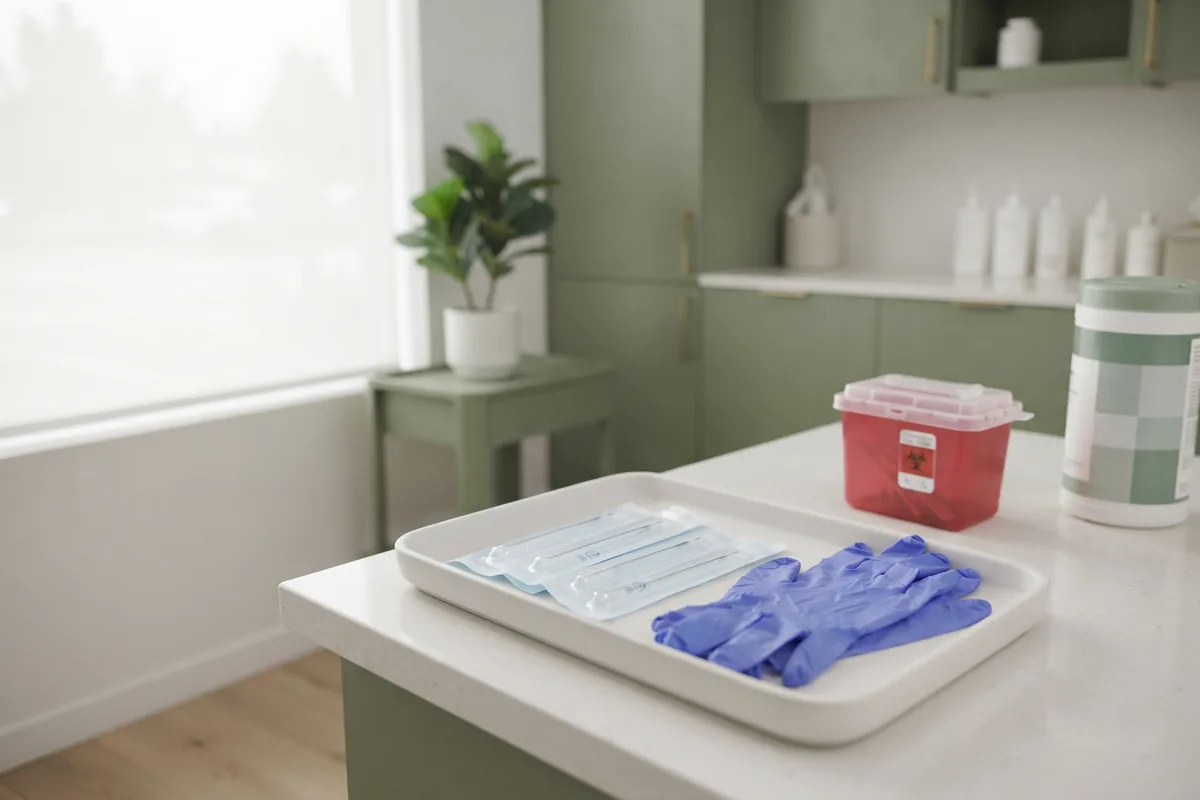
Hygiene: new sterile probe and fresh gloves for every client.
Consultation: should be a real conversation about your history, not a sales pitch.
Red flags: guaranteed results, fixed session counts, pressure to prepay a large package.
At this studio: the in-studio consultation is free, so you can ask all of this in person.
Why the Person Matters More Than the Device
Electrolysis is a manual craft. A fine probe goes into each follicle at the right angle and depth, and the current is set for that hair. Two practitioners with the same machine can give very different outcomes, in both results and skin health.
A skilled electrologist reads the hair, the skin and your reaction, then adjusts. A weak one treats every hair the same, which is how you end up with regrowth, pitting or dark marks. Because the procedure breaks the skin barrier, hygiene and technique are not extras. They are the job.
That is why I tell clients to treat the choice like picking a dentist, not like booking a quick service. A few questions up front save months of repeat sessions.
It also helps to remember that electrolysis is a series, not a single appointment. You will see this person many times over many months, so comfort and trust count. If the first visit leaves you uneasy, that feeling is useful information, and it is fine to try another studio.
Step One: Check the California License
In California, electrologists are licensed by the Board of Barbering and Cosmetology. Electrology is its own license, separate from a cosmetologist or esthetician license. Someone who is licensed in one is not automatically licensed in the other, so ask which license they hold for electrolysis specifically.
You can check this yourself in a few minutes:
Ask the practitioner for their electrologist license number before you book. Anyone legitimate will give it without hesitation.
Look up the number on the Board of Barbering and Cosmetology license search on the board's website.
Confirm the name matches the person who will treat you, that the license is current and that there is no record of discipline.
Ask whether the studio itself is licensed as an establishment. Studios generally need this as well.
I have left out details like required training hours and exam content because I do not want to state a number you can get wrong. The board's site is the right source for that. What matters for you is the lookup: a name, a number and an active status.
At Real Skin Beauty, Aida's credentials are on the credentials page, and she will show her license documentation at your consultation if you ask. You should expect the same from anyone else.
A good first visit is a conversation: your history, your goals and the practitioner's credentials.
Step Two: Questions to Ask at the Consultation
A consultation tells you more than any website. Bring this list, and note not just the answers but how they are given. A confident electrologist answers plainly. A defensive one changes the subject.
"What is your license number?" You want a clear answer and a number you can verify.
"How do you handle probes and tools?" The answer should be single-use sterile probes, opened in front of you, discarded in a sharps container after use.
"Which modality will you use on my hair?" A good answer names thermolysis, galvanic or blend and explains why it fits your hair. My article on how many sessions you need shows how hair type changes the plan.
"What is a realistic timeline?" Expect a range with caveats, not a promise.
"What would make you decline or pause treatment?" Good practitioners ask about medications, pregnancy, skin conditions and hormones. They should tell you to see a physician if hair growth is sudden or heavy.
"What is the full cost?" Ask for the per-session price, the session length and whether anything is charged on top.
"How do I care for my skin afterward?" You should leave with clear instructions. Mine are in the electrolysis aftercare guide.
Also pay attention to the questions they ask you. A consultation where nobody asks about your health, your skin or your medications is not a consultation.
What a Good First Visit Looks Like, Step by Step
Knowing the normal flow helps you spot a visit that skips important parts. At a careful studio, the first appointment follows a pattern like this.
Health history. You fill in a form about medications, allergies, skin conditions, pregnancy, implanted devices and past hair removal. The questions can feel long. They are a good sign.
A conversation about goals. Which areas, what you want them to look like, and what your budget and schedule allow.
A look at the hair and skin. The electrologist checks hair thickness, density, direction and how the skin is behaving, ideally under magnification.
An explanation of the method. You hear which modality is planned, what it feels like and how the skin usually looks afterward.
A written or clearly stated plan. Session length, price per session, how often to come and what the first few visits will focus on.
Consent. You should be asked to sign consent before treatment begins and be given time to read it.
Optional test area. Many electrologists will treat a small patch first so you can feel the sensation and see how you heal.
If you are being rushed past the paperwork straight to the chair, treat that as information. My guide to your first electrolysis appointment goes through the same steps from the client side, including how to prepare your skin.
Hygiene Checklist: What You Should See in the Room
You do not need medical training to spot good hygiene. Watch for these things:
The electrologist washes hands and puts on fresh gloves in front of you.
The probe comes from a sealed package and is single-use. You should never see a probe being reused or wiped and put back.
There is a visible sharps container for used probes.
Surfaces, chairs and the treatment area look clean, and the skin is cleansed before treatment.
The electrologist uses a magnifying lamp so they can see what they are treating.
Nothing about the process feels rushed. You can ask a question or take a break without a fuss.
If something looks off, you can leave. Telling a practitioner "I need to think about this" is always acceptable, and a professional will not argue.
Terms You Will Hear and What They Mean
Jargon can make it hard to tell whether someone is explaining or just impressing you. A competent electrologist can put every term into plain language. These are the ones that come up most.
Term
Plain meaning
Thermolysis
High-frequency energy creates heat at the follicle. It is usually quick per hair.
Galvanic
A direct current produces a chemical change in the follicle. It is slower and is often used for stubborn or curved follicles.
Blend
A combination of the two, used when an electrologist wants the speed of heat and the thoroughness of the chemical action.
Probe
The very fine filament that goes into the follicle. It should be sterile, single-use and opened in front of you.
Follicle
The small pocket in the skin the hair grows from. It is the target of treatment.
Anagen
The active growth phase of a hair. Only follicles in this phase respond best to treatment.
Regrowth
Hair that appears after a session. Some is untreated hair that was not active yet, not a failure of treatment.
You do not need to memorize any of this. You only need to notice whether questions get clear answers. My article on galvanic, thermolysis and blend explains how the choice affects your sessions.
Red Flags That Should Send You Elsewhere
Some warning signs come up often enough that I list them for clients. One of them alone is reason to ask more. Several together is reason to leave.
Red flag
Why it matters
What a good practitioner does instead
Promises permanent results in a set number of sessions
Hair grows in cycles and every person differs
Gives a range and explains the variables
Will not share a license number
You cannot verify who is treating you
Gives the number and invites you to check it
Reuses probes or does not open them in front of you
Infection risk
Opens a sealed single-use probe at your visit
Pushes a large prepaid package on day one
Pressure replaces informed choice
Lets you pay per session and decide as you go
No questions about health, medications or skin
Missed contraindications
Asks about history before treating
Treats without magnification or in poor light
Harder to place the probe accurately
Works under a magnifying lamp
Dismisses your concerns about pain or marks
Poor communication shows up later in treatment
Explains options such as numbing cream and pacing
One more flag deserves its own line: very low prices. A price far below the local range often means short sessions, rushed work or corners cut. That is not always true, but ask what is included before you book. If you want to understand how pricing works in Orange County in the first place, my guide to electrolysis cost in Orange County breaks it down.
Sealed, single-use probes and fresh gloves are the baseline you should expect to see.
Comparing Two Studios: A Simple Scorecard
When you have narrowed the list to two or three, put them side by side. Use the table as a quick way to compare what you learned at each consultation. Fill in the blanks for each studio and let the gaps speak.
What to check
What a strong answer looks like
Where to verify
License
Number given freely, active status, name matches
Board of Barbering and Cosmetology license lookup
Probes
Sealed, single-use, opened in front of you, sharps container visible
Watch the room at the consultation
Consultation
Health questions, hair and skin check, clear plan, no pressure
Your own experience of the visit
Timeline
A range with reasons, not a guarantee
Ask in your own words and note the answer
Pricing
Per-session price and session length stated plainly
Written price list or booking page
Package terms
Optional, with clear refund and expiry terms
Ask for the policy in writing
Aftercare
Written or spoken instructions you can follow at home
Compare with an aftercare guide you trust
Specialization
Electrolysis is a core service, not a side service
Services page and how the practitioner describes the work
There is no perfect score. You are looking for the studio where more answers are clear and fewer are evasive. A studio that is slightly farther away but gets most of these right is usually worth the drive. Irvine and the rest of Orange County have many options, which makes comparing easier.
Prices, Packages and Prepaying: What Is Reasonable
Money is the area where good studios and pushy ones separate fastest. Here is how I think about it.
Per-session pricing is the norm. You pay for the time and area treated. At Real Skin Beauty that is $50 for upper lip (20 minutes), $65 for chin (30 minutes), $75 for a general facial zone (30 minutes) and $90 for cheeks, neck or hairline (45 minutes).
Packages are optional, never required. If a discount is offered for prepaying, ask what happens if you stop, move or are unhappy. Get the terms in writing before you pay.
Be wary of urgency. A deal that expires today pushes you to decide before you have compared anything.
Ask what is not included. Consultation, numbing cream, aftercare products and rebooking fees should be stated before you commit.
Do not choose by price alone. The cheapest session is not cheap if it needs repeating or leaves a mark.
For more context on what local pricing looks like and why totals vary, read my guide to electrolysis cost in Orange County. I never quote a total before I have seen your hair, because honest totals depend on density, area and how you respond.
Electrologist, Esthetician or Laser Clinic: Who Does What
Part of the confusion is that several professionals offer hair removal. They are not interchangeable:
Electrologist: licensed for electrolysis. This is the specialist for permanent hair removal that works on any hair color.
Esthetician or cosmetologist: licensed for skin care and waxing. A great person for a facial or a wax, but electrolysis is a separate license in California.
Laser provider: offers light-based hair reduction. It depends on pigment and works best on dark hair.
If you are choosing between methods rather than people, read electrolysis vs. laser hair removal. If you have already had laser and see new or stubborn hair, an electrologist can usually pick up where it left off.
Look for a studio where treatment is the main business, not a side service. Hair removal done between other services tends to get less time and attention.
Reviews are worth reading, but read them for specifics. Comments about careful technique, clear explanations and honest timelines tell you more than a star count. Be cautious with reviews that only praise a low price, and remember that no review can replace checking the license yourself.
Before and After Photos, Ads and Social Media
Social media makes every studio look polished. Treat photos as a starting point, not proof.
Before and after photos are useful only when lighting, angle and distance are the same. Be skeptical when they are not.
Photos tell you nothing about hygiene, licensing or how the practitioner handles a problem.
Results vary from person to person. A studio that promises you the same result as a photo is promising something no one can guarantee.
A glossy account with no information about credentials, prices or the person doing the work is a reason to ask more questions, not fewer.
Favor educational content: explanations of method, hair cycles and aftercare. It shows how a practitioner thinks.
The best signal is still the consultation. A calm, specific, honest conversation tells you more than any feed.
A proper intake covers medications, skin conditions and goals before any probe touches the skin.
When to See a Physician Before You Book
An electrologist treats hair. A physician diagnoses why it is growing. Sometimes you need the second before the first.
Hair appearing suddenly or growing much faster than before.
Facial or body hair together with irregular periods, acne or weight changes, which can point to a hormonal cause such as PCOS.
Hair changes after starting or stopping a medication.
Hair growth that started around menopause and is bothering you.
Skin changes around hair, such as a mole, sore or patch that is growing, bleeding or not healing.
A good electrologist will ask about these and suggest a medical check when appropriate. Treatment can still go ahead alongside medical care, but the underlying cause should be looked at. My articles on PCOS and facial hair removal and PCOS versus normal hair growth explain the difference.
Your Pre-Booking Checklist
Run through this list before you pay for a first treatment session. If you can tick most boxes, you have likely found a careful practitioner.
I have the electrologist license number and have looked it up myself.
I know which modality will be used on my hair and why.
I have seen a sealed probe opened and a sharps container in the room.
I was asked about my health, my medications and my skin, not only my budget.
I was given a range for the timeline, not a promise.
I know the price and length of each session, and nothing was added at the end.
Nobody pushed me to prepay or to decide today.
I know how to care for my skin afterward and whom to call if something looks wrong.
Those eight lines cover most of what I would want if a family member were choosing. If one line is missing, ask. A good practitioner is glad to be asked, and a free consultation at a studio like mine exists for exactly that reason.
What to Expect Cost-Wise and How to Start in Irvine
At Real Skin Beauty, prices are posted by area and session length. Upper lip is $50 for 20 minutes, chin is $65 for 30 minutes, cheeks and neck are $90 for 45 minutes, and arms are $120 for an hour. The consultation in the studio is free, and an online consultation is $50.
Use that free first visit to run your checklist. Ask for the license number, look at the room, ask how probes are handled, and ask for a realistic timeline. Then go home and decide. A reputable studio will be comfortable with you taking a day or two.
+ How do I check if an electrologist is licensed in California?
Ask for the electrologist license number and look it up on the California Board of Barbering and Cosmetology website. Confirm the name matches your practitioner and that the license is active. A legitimate electrologist will give you the number without hesitation.
+ Can an esthetician perform electrolysis in California?
Electrology is a separate license from esthetics and cosmetology. A practitioner should hold the electrologist license to perform electrolysis, so ask specifically which license they hold for that service. The Board of Barbering and Cosmetology site is the place to verify.
+ What questions should I ask before my first electrolysis session?
Ask for the license number, how probes and tools are handled, which modality will be used, a realistic timeline, the full cost per session and how to care for your skin afterward. Good practitioners also ask about your health, medications and skin history.
+ What are red flags when choosing an electrologist?
Guaranteed results, a fixed number of sessions, refusal to share a license number, reused probes, pressure to prepay a large package and no questions about your health. Any one of these is a reason to ask more. Several together are a reason to leave.
+ Is a consultation free?
At Real Skin Beauty the in-studio electrolysis consultation is free and lasts about 30 minutes. An online consultation is $50. Use the visit to check credentials, see the room and get a realistic estimate before committing.
+ How long should an electrolysis consultation take?
A thorough consultation usually takes about 30 minutes. At Real Skin Beauty, the in-studio consultation is free and 30 minutes. It should include a health history, a look at your hair and skin, an explanation of the method and a realistic plan.
+ Should I pay for a package of electrolysis sessions up front?
You are never required to. Per-session pricing lets you see how your skin and hair respond before committing more money. If a package is offered, ask for the refund and expiry terms in writing and give yourself a day or two to decide.
+ Can I switch electrologists in the middle of treatment?
Yes. Bring any notes you have about the areas treated, the modality used and how your skin healed. A new electrologist will assess the hair as it is now, and you are free to stop at any time.
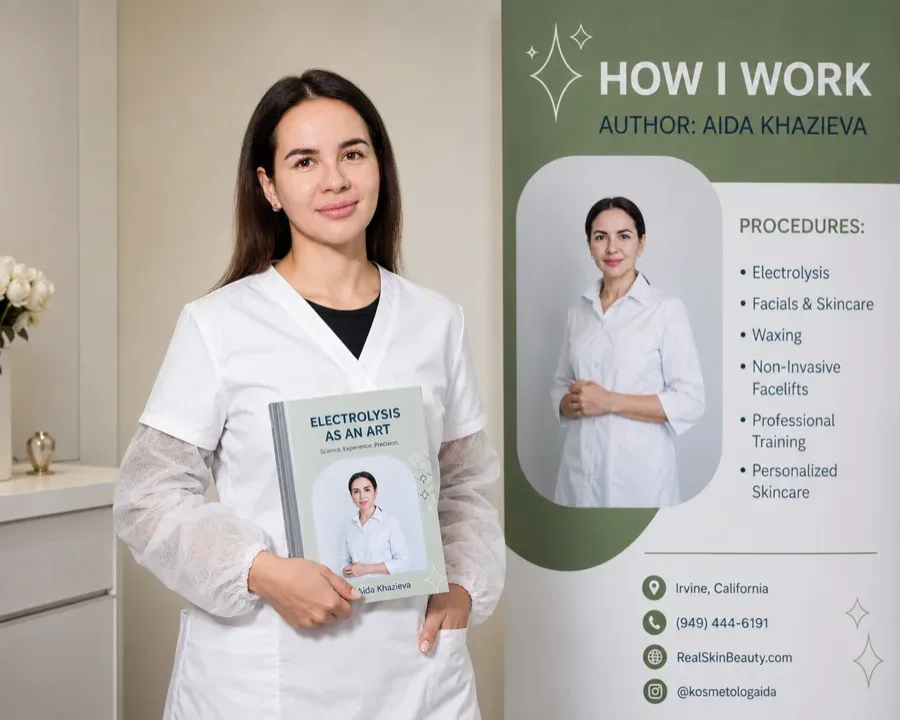
Licensed electrologist and cosmetologist with 20+ years of experience. Aida sees clients at Real Skin Beauty, 18021 Sky Park Circle, Suite N, Irvine, CA 92614.
Book a free consultation with Aida Khazieva at Real Skin Beauty in Irvine, CA. Bring your questions, ask to see her license and get an honest estimate before you commit to anything.
This article is for informational purposes and reflects Aida Khazieva's professional experience. It does not replace a personalized medical consultation. Individual results vary.
Questions? Aida Answers Them All.
Visit our FAQ or book a free consultation to discuss your specific skin and hair concerns.