By Aida Khazieva·Electrolysis·15 min read·Real Skin Beauty, Irvine CA·Updated October 21, 2026
Most electrolysis sessions take 15 to 60 minutes. Small facial areas such as the upper lip or chin usually need 20 to 30 minutes, while legs, back or bikini are booked for about an hour. The real limit is how many hairs are actively growing, because I treat each follicle one at a time.
Quick answer
Upper lip about 20 minutes, chin about 30 minutes, cheeks or neck about 45 minutes.
Body areas such as legs, back, arms and bikini are usually one hour.
Early sessions are fuller, later sessions often get shorter as fewer hairs return.
Short frequent visits suit the face and sensitive skin, longer visits suit large body areas.
Consistency matters more than marathon sessions.
The Short Answer: Most Sessions Run 15 to 60 Minutes
An electrolysis session usually lasts anywhere from 15 minutes to an hour. Small facial areas such as the upper lip or chin often fit into 20 or 30 minutes. Larger body areas such as the legs, back or bikini line are usually booked as one hour. The length is set by how many hairs are actively growing in the area you want treated, not by a fixed clock.
That last point surprises people. Electrolysis treats one hair at a time. A fine probe slides into the natural opening of each follicle, a small amount of energy is delivered, and the loosened hair is lifted out with tweezers. So the real question is not "how long is a session?" but "how many hairs can we treat well in the time you have?" In my Irvine studio I plan every appointment around that question.
Below I explain the time slots I use for each area, what actually happens during those minutes, why your first sessions may feel longer than later ones, and how to choose between short frequent visits and longer ones. If you want to know how many visits the whole process takes, that is a different question, and I answer it in how many electrolysis sessions you need.
Session Times by Area at Real Skin Beauty
These are the standard appointment lengths on my booking system. They are starting points. After the first visit I often suggest moving up or down a slot depending on what I see under magnification.
Area
Standard appointment
Price
Typical reason for that length
Upper lip
20 minutes
$50
Small area, usually fine hairs, sensitive skin that benefits from short visits
Chin
30 minutes
$65
Often coarse hormonal hairs that need careful work one by one
General facial zone
30 minutes
$75
Brows, sideburns or a mix of small facial spots
Cheeks
45 minutes
$90
Wider area with scattered hairs
Neck
45 minutes
$90
Curved surface, often coarse hairs that grow at angles
Hairline
45 minutes
$90
Shaping work where precision matters more than speed
Underarm
45 minutes
$90
Dense, coarse hair in a compact area
Chest and decollete
45 minutes
$100
Moderate area, density varies a lot between clients
Arm
1 hour
$120
Large surface
Back
1 hour
$120
Large surface, often coarse hair
Bikini
1 hour
$110
Coarse, curly hair that needs careful angles
Brazilian
1 hour
$130
Larger and more sensitive area
Leg
1 hour
$150
Largest area, often booked as a series
Electrolysis for PCOS
1 hour
$110
Higher hair counts on the face and neck
A one hour slot on the legs does not mean both legs are finished in one hour. On large areas we work section by section and return to the next section at the following appointment. That is normal and expected. The goal of each visit is steady, clean progress on hairs that are in the right growth stage, not covering every inch at once.
What Actually Happens During the Minutes You Book
Not every minute of your appointment is probe time. Here is how a typical 30 minute chin visit breaks down in my studio:
Arrival and check in (a few minutes). I ask how your skin healed since last time and whether anything changed: new medication, a new skincare product, a recent wax or pluck.
Cleansing and preparation. The skin is cleansed and disinfected. I set the magnifying lamp and open a new sterile, single use probe in front of you.
Treatment time. This is the bulk of the appointment. I insert the probe into each follicle, apply current, and lift the hair. For coarse hairs I work more slowly and check each follicle.
Short comfort pauses. If an area feels sensitive I pause, move to a different spot and come back.
Aftercare. A cool compress or soothing gel, and a quick reminder about the next 24 to 48 hours.
On a 20 minute upper lip appointment, the preparation and aftercare parts are about the same length as on an hour long visit. That is one reason very short appointments feel quick: a larger share of the time goes to setup. It is also why I rarely recommend splitting a 30 minute chin visit into two separate 15 minute visits on different days. You would pay for setup twice and get less probe time overall.
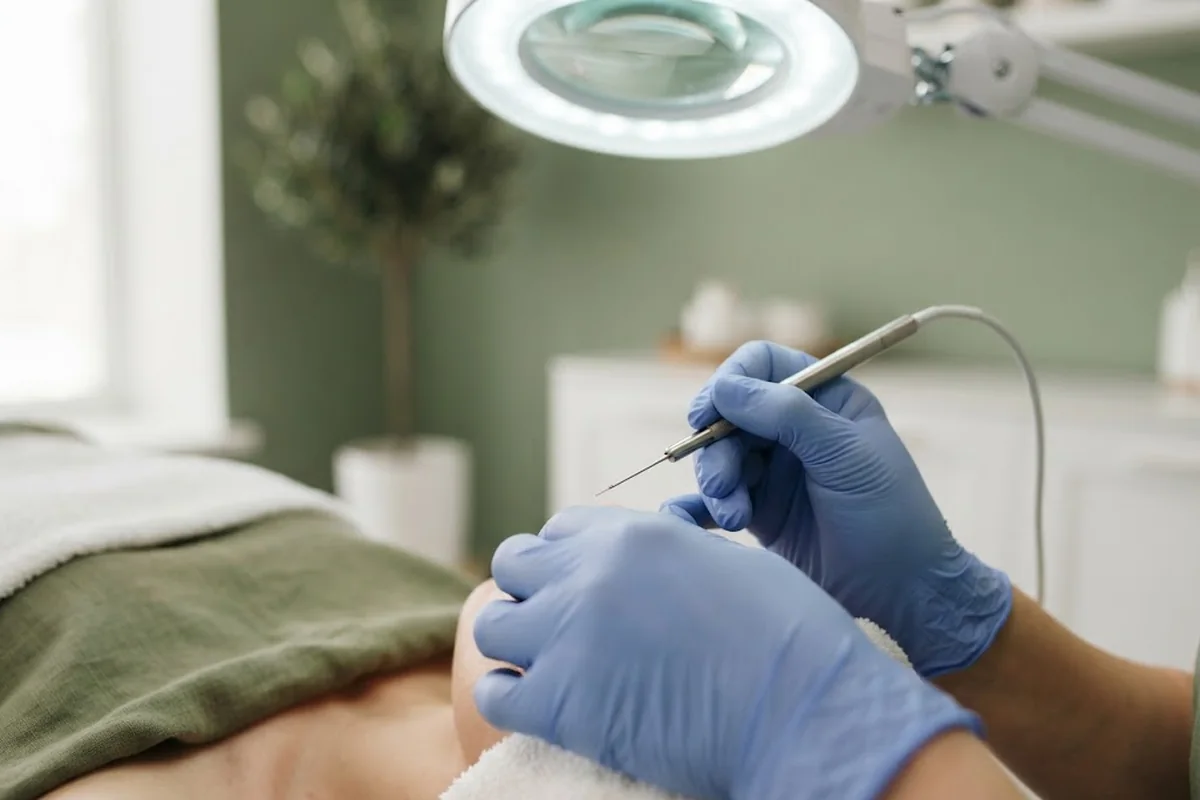
Every hair is treated one at a time under magnification, which is why session length follows hair count.
Why each hair takes time
Electrolysis is precise work. For each hair, I need to see the angle of growth, slide the probe along the hair shaft into the follicle without piercing the skin, apply the right amount of energy for that hair's thickness and depth, and then check that the hair releases easily. A hair that resists is not pulled. It is retreated or left for next time, because pulling a hair that has not released only removes the shaft and leaves the follicle able to grow again.
Fine vellus hairs on the upper lip may take a second or two each. A deep, coarse chin hair may take noticeably longer. The type of electrolysis used also matters. Thermolysis is generally faster per hair. Galvanic and blend methods take longer per follicle but may suit some coarse or curved hairs. I explain the differences in galvanic, thermolysis or blend.
Why Hair Count and Growth Stage Set the Length
Hair grows in cycles. At any moment some follicles are in the active growth phase (anagen), some are transitioning and some are resting. Electrolysis tends to work best on hairs in the active phase, because the hair is still attached to the part of the follicle that produces it. Resting hairs may need to come back up before they can be treated effectively.
This has a direct effect on session length:
Early sessions are usually longer. When you first start, every hair that has been growing for years is visible at once. There is simply more to treat.
Middle sessions become shorter or stay steady while covering more area. As treated follicles weaken, fewer hairs come back, so the same 30 minutes covers more of the area.
Later sessions are often short check ins. When only a few stragglers return, a 15 or 20 minute visit may be all you need.
If you have been shaving for years, the first visits can be dense, because shaving keeps every hair visible and growing. If you have been plucking, you may see fewer hairs at first, then more as plucked hairs grow back. For that reason I ask clients to stop plucking and waxing well before treatment. My guide on shaving, plucking or waxing between electrolysis sessions explains what to do in between.
Stage of treatment
What you usually see
What I usually suggest
First one to three visits
Many hairs, including old coarse ones
Standard or longer slots, close together
Clearing phase
Regrowth looks finer and sparser
Same slot covers more area, or a shorter slot
Maintenance phase
A few scattered hairs
Short appointments, spaced further apart
Hormonal changes (PCOS, menopause)
New hairs may keep appearing
Regular steady slots, discussed with your physician's care plan
Short Sessions or Long Sessions: Which Is Better?
Both can work. The right choice depends on the area, your skin, your comfort and your schedule.
When short sessions make sense
Small areas like the upper lip or a few chin hairs
Sensitive skin that reddens easily
Clients who are new to electrolysis and want to see how their skin reacts
Busy schedules where a lunch break visit is realistic
Maintenance visits near the end of treatment
When longer sessions make sense
Larger areas such as the legs, back, arms or bikini line
Dense regrowth in the early phase of treatment
Clients who travel from other parts of Orange County and prefer fewer trips
Clients with hormonal hair growth who want steady progress
Shorter, more frequent sessions
Longer, less frequent sessions
Comfort
Easier for sensitive skin and first timers
Needs a little more patience, with pauses
Skin reaction
Less treated skin at once, so less redness
More treated skin at once, more redness for the day
Catching hairs in the growth stage
Very good, since you come back often
Good if the schedule matches your growth cycle
Setup share of time
Higher
Lower
Best for
Face, small zones, maintenance
Body areas, early dense phase
What matters most is consistency. A 20 minute visit every week or two often clears a chin faster than a long visit once every two months, because hairs get treated in the right stage before they can rest again.
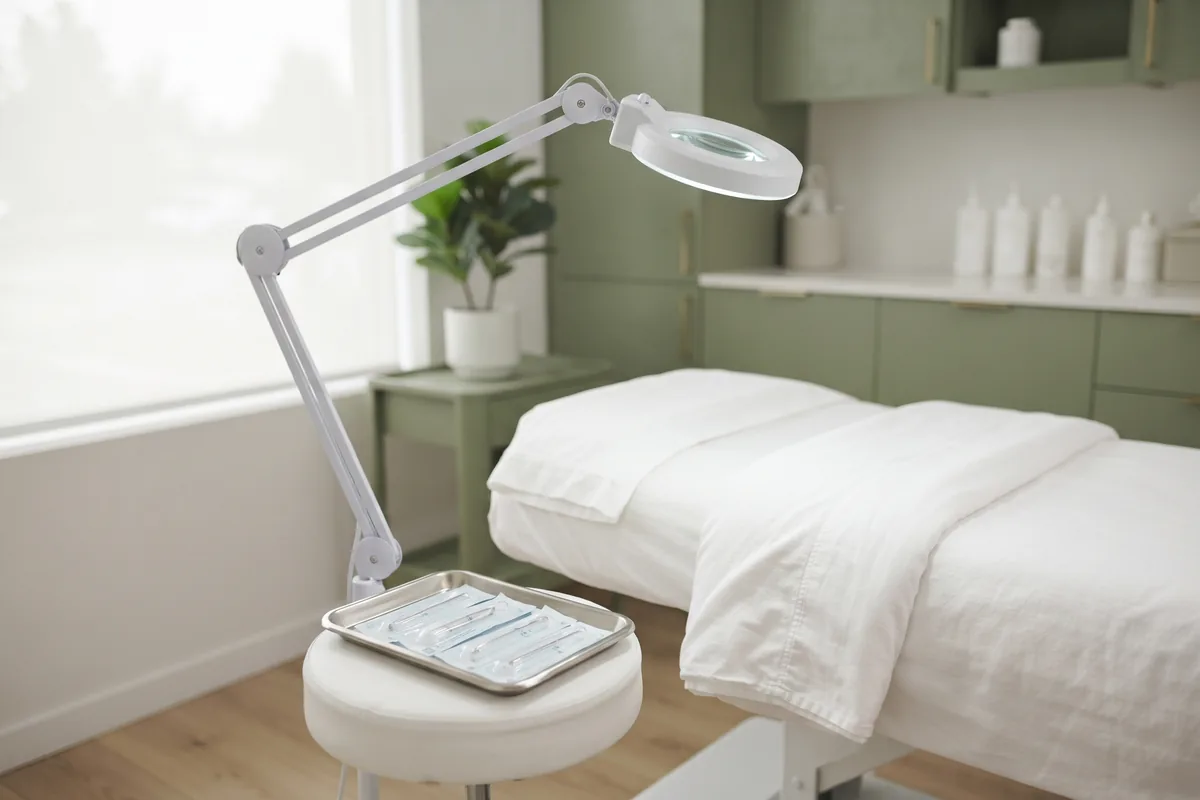
A prepared room and a new sterile probe are part of every appointment, short or long.
Is It Possible to Do Too Much in One Session?
Yes. More time is not always better. Treating a very dense area for a long stretch can leave skin red, swollen or tender for longer than usual, and skin needs time to heal between visits. If too many neighboring follicles are treated close together, the skin can become irritated. A good electrologist spreads the work out rather than clearing a tight patch completely.
I also watch for signs that the skin has had enough: persistent redness that is not settling, swelling, or the client becoming uncomfortable. When that happens, I stop for the day, even if there is time left. The next visit always goes better on calm skin. If you are worried about reactions, my article on electrolysis side effects explains what is normal and when to call.
My rule of thumbHealthy skin between visits matters more than the number of hairs removed in one sitting. A shorter session that heals cleanly beats a long one that leaves the skin angry for days.
Comfort Breaks and How They Affect Timing
Electrolysis feels different from person to person and from area to area. The upper lip and the bikini line are often more sensitive than the chin or legs. Comfort also changes with sleep, stress, caffeine and, for many women, the time of the month.
I build comfort into the timing in a few ways:
Short pauses. A few seconds of rest after a sensitive cluster makes a real difference.
Moving around the area. Instead of working one tight spot, I move across the zone, which is kinder to the skin and spreads the sensation.
Adjusting settings. Within safe ranges, energy and timing can be adjusted for comfort and hair type.
Talking. I check in with clients, and they can ask me to pause at any time.
Pauses do use some of your booked time, and that is fine. A relaxed client holds still, which makes my work more accurate. If you want to plan for comfort, read does electrolysis hurt and my guide to numbing cream for electrolysis. If you plan to use a topical numbing product, ask your physician or pharmacist first and tell me before the appointment, because it changes how early you need to apply it before your slot.
How to Schedule Your Sessions
Session length and session spacing go together. A good schedule catches hairs as they come back into the growth stage. In general, facial areas are often seen weekly or every two weeks at the start, and body areas often every two to four weeks. Over time the gap usually gets longer as fewer hairs return. Your own plan depends on your hair, your skin and how it heals.
Some practical tips from my studio:
Book the next visit before you leave. Consistency is the biggest factor you control.
Keep a simple notebook or calendar. Note the date, the area and how many days until you saw regrowth. Patterns help me plan.
Avoid big events the day after. Mild redness or tiny pinpoint marks are common for a day or so on the face.
Tell me about schedule limits. If you can only come once a month, I will plan longer slots that make the most of each visit.
Let hair grow a little. Hairs need to be long enough to grip with tweezers. For most areas a few days of growth after shaving is enough. I explain the details at booking and in your first electrolysis appointment.
Writing down dates and regrowth helps plan the right session length and spacing.
What if you miss a visit?
Life happens. If you skip a planned visit, hairs that were in the growth stage may move on in their cycle, and new ones may appear. The next session may feel a little fuller than expected. That does not undo the work already done. Treated follicles that were weakened stay weakened. Simply return to your regular rhythm, and if the regrowth looks heavier, I may suggest one slightly longer appointment to catch up before going back to your usual slot length.
What Can Make a Session Longer or Shorter
Factor
Tends to lengthen treatment time
Tends to shorten treatment time
Hair texture
Coarse, deep, curly or distorted follicles
Fine, straight hairs
Recent hair removal
Waxing or plucking (distorted follicles, uneven growth)
Trimming or shaving only, as advised
Hair density
Many hairs in growth stage at once
Sparse regrowth
Skin sensitivity
Areas that need pauses
Calm, well healed skin
Hormones
Ongoing hormonal stimulation
Stable hormones
Hair color
Very light hair can be harder to see and needs careful lighting
Dark hair against the skin is easy to spot
Hair color does not stop electrolysis from working. Electrolysis treats blonde, gray, red and white hairs, which laser often cannot target. Light hairs just need good magnification and lighting. More on that in electrolysis for blonde, gray and red hair.
Electrolysis Session Length Compared With Other Methods
People often compare electrolysis time with laser or waxing. The comparison helps set expectations, though each method works differently. My studio does not offer laser, so I describe it in general terms.
Method
How it treats hair
Typical time feel per visit
Result
Electrolysis
One follicle at a time with a fine probe
Short for small zones, an hour for large body areas
FDA recognizes electrolysis as a method of permanent hair removal
Laser hair removal
Light pulses over many follicles at once
Often quick per area
Long term reduction, works best on dark hair
Waxing
Pulls hairs out from the root
Quick
Temporary, hair returns in weeks
Shaving
Cuts hair at the surface
Very quick
Temporary, hair returns in days
Electrolysis takes longer per hair because it is precise. That precision is also why it can treat any hair color, small stray hairs and areas that other methods cannot address well. For a fuller comparison, read electrolysis vs laser.
Planning Your First Appointment in Irvine
If you are new to electrolysis, I usually start with a free consultation. We look at the area under magnification, talk about your hair history and any medical conditions, and I suggest a slot length for your first treatment. For a small facial area that is usually 20 or 30 minutes. For body areas we often start with 45 minutes or an hour and adjust after we see how your skin responds.
Clients come to my studio at 18021 Sky Park Circle, Suite N, from Irvine, Tustin, Costa Mesa, Newport Beach and around Orange County. If you are traveling a distance, tell me, and I will plan longer slots so each trip counts. If you are close by and like short visits, we can do that too. The best session length is the one you can keep up with.
I have practiced as a licensed electrologist and cosmetologist for more than 20 years, and I wrote the book "I Am an Electrologist" about this work. The single biggest lesson from those years is simple: steady, well timed sessions get people to their goal, while occasional marathon sessions usually do not. You can book through the electrolysis page or call (949) 444-6191.
Frequently Asked Questions
+ How long does an electrolysis session take?
Most electrolysis sessions last between 15 minutes and one hour. Small facial areas such as the upper lip or chin usually take 20 to 30 minutes, while larger areas such as legs, back or bikini are usually booked for an hour. The length depends on how many hairs are actively growing in the area.
+ How long is an upper lip electrolysis session?
An upper lip electrolysis session is often about 20 minutes. The area is small and the skin is sensitive, so short, regular visits usually work well. Early visits may feel fuller because more hairs are visible, and later visits often become quick maintenance appointments.
+ How long does chin electrolysis take per session?
Chin electrolysis is commonly booked as a 30 minute session. Chin hairs are often coarse and hormonal, so each follicle needs careful work. As treated hairs weaken and fewer come back, the same 30 minutes covers more of the chin, and later visits may be shorter.
+ Can you do electrolysis for two hours at once?
Long sessions are possible for large body areas, but more time is not always better. Treating many follicles close together can leave skin red and tender for longer. Many electrologists prefer one hour visits on body areas, spread out across sections, so the skin heals well between visits.
+ Why do my first electrolysis sessions take longer?
At the start, every hair that has been growing for years is visible, so there is more to treat. As treated follicles weaken and fewer hairs come back, each session covers more area or becomes shorter. Hair that was plucked or waxed before treatment can also take extra time.
+ Are shorter or longer electrolysis sessions better?
Both can work. Short, frequent sessions suit small facial areas, sensitive skin and maintenance. Longer sessions suit large body areas and dense early regrowth. Consistency matters most, because returning regularly catches hairs in their growth stage, which is when electrolysis tends to work best.
+ How long should hair be before an electrolysis session?
Hair needs to be long enough to grip with tweezers, so most people stop shaving the area a few days before the visit. Do not wax or pluck between sessions. Your electrologist will tell you the right length and timing for your area when you book.
+ How much time should I plan for a whole electrolysis visit?
Plan for your booked slot plus a few minutes for check in and aftercare. Preparation includes cleansing and opening a new sterile probe, and aftercare includes a cool compress or soothing gel. Facial skin may look a little red for a few hours, so avoid booking right before an event.
Licensed electrologist and cosmetologist with 20+ years of experience. Aida sees clients at Real Skin Beauty, 18021 Sky Park Circle, Suite N, Irvine, CA 92614.
Book a free consultation with Aida Khazieva at Real Skin Beauty in Irvine, CA. She will look at the area under magnification and suggest a slot length and schedule that fits your hair and your calendar.
This article is for informational purposes and reflects Aida Khazieva's practitioner experience. It does not replace a personalized medical consultation. Individual results vary.
Questions? Aida Answers Them All.
Visit our FAQ or book a free consultation to discuss your specific skin and hair concerns.