Electrolysis for Blonde, Gray and Red Hair That Laser Cannot Treat
By Aida Khazieva·Electrolysis·14 min read·Real Skin Beauty, Irvine CA·Updated October 11, 2026
Yes, electrolysis removes blonde, gray, white and red hair. Laser and IPL depend on pigment in the hair to absorb light, so light hairs often give them nothing to work with. Electrolysis does not read color at all. A fine probe goes into the follicle and treats the source of the hair, which is why it is the method I use at my Irvine studio for hair that other treatments have missed. It is FDA-recognized permanent hair removal, and it takes a series of visits.
Quick answer
Laser targets melanin in the hair. Little pigment means little response.
Electrolysis targets the follicle, so hair color and skin tone do not limit it.
Gray and white hair is common on the chin and upper lip after menopause and often grows alongside darker hairs.
Results take a series of visits. Fine light hair can be slower to see and slower to treat, and nobody can promise a number of sessions.
Why Laser Skips Light Hair
Laser hair removal works by sending a wavelength of light into the skin. The pigment in the hair, called melanin, absorbs that light and turns it into heat, and the heat damages the follicle. The system depends on contrast between the hair and the skin around it.
That explains the pattern clients describe to me. Black or dark brown hair on light skin responds best. As hair gets lighter, there is less pigment to absorb the energy:
Hair color
Melanin in the hair
Typical laser response
Black or dark brown
High
Best response, on lighter skin
Light brown
Moderate
Variable
Blonde
Low
Often poor
Red
Reddish pigment that absorbs light differently
Often poor
Gray
Little to none
Often poor
White
None
No pigment to target
Clinics usually screen for this at the consultation, and a good one will tell you honestly when laser is not likely to help. If you have already tried it and watched light hairs stay put, you were not imagining it, and there is nothing wrong with your skin or your hair. The tool simply was not built for that hair. My full comparison of the two methods is in Electrolysis vs. Laser Hair Removal.
How Electrolysis Works Without Pigment
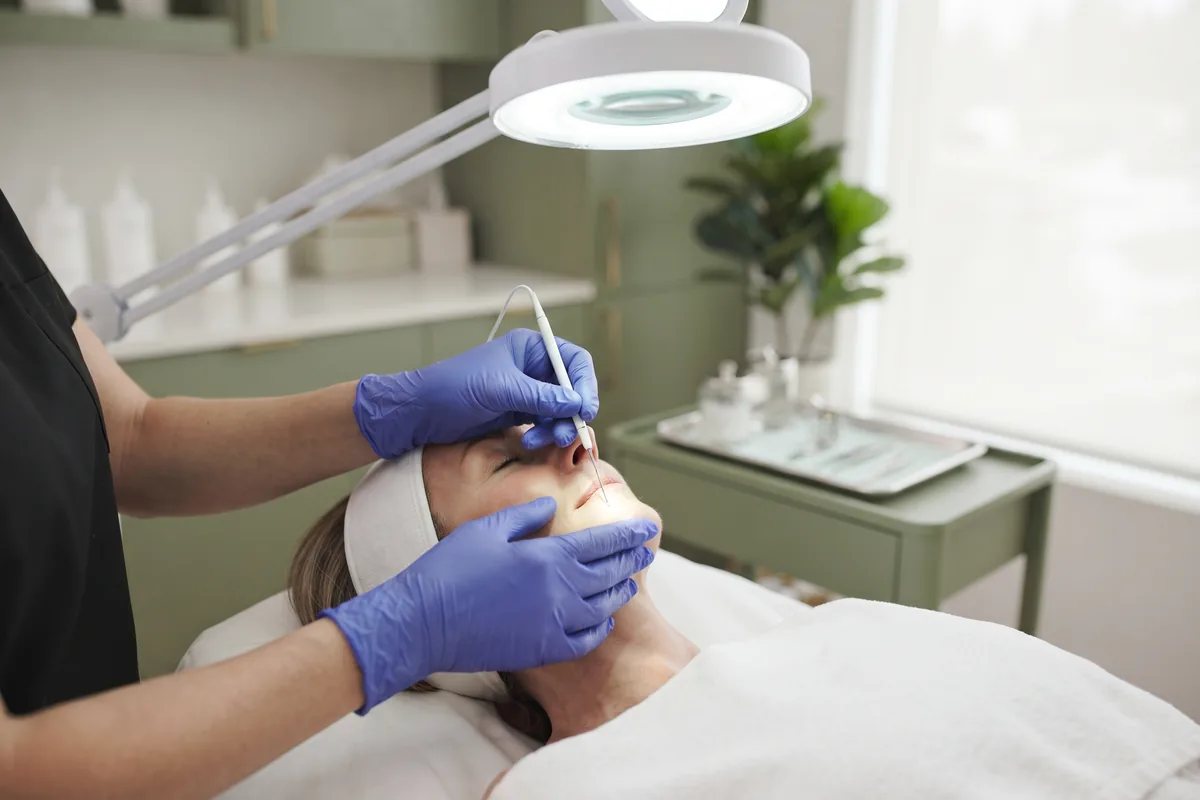
Electrolysis treats the follicle directly. Under magnification I slide a probe thinner than a hair into the follicle opening, alongside the hair shaft, down to the base where the hair is made. A small, controlled amount of current is delivered there for a moment. The hair then lifts out with no resistance. If it does not, I treat that follicle again.
At no point does the process measure color. A white hair and a black hair have follicles built the same way, so the same technique applies. The same is true of skin tone, which is why electrolysis is used on all skin types where laser has limits. If you want the details of the modalities, galvanic, thermolysis and blend, I will explain which one suits your hair at the consultation.
Electrolysis is the method the FDA recognizes as permanent hair removal. Follicles that are fully treated do not grow hair again. What can change over time are new hairs from follicles that were dormant or hormonally stimulated, and I explain that candidly in Is Electrolysis Really Permanent?
Blonde Hair: Fine, Pale and Hard to See
Blonde hair is often fine, and fine hair has a thin follicle opening. It takes a smaller probe and steady hands, and it is hard to see in normal light. I work under magnification with strong lighting so that I can identify each hair individually.
Two practical points for blonde hair. First, a short stubble that you can barely see is hard to treat well. Hair usually needs to be visible and grown out slightly. Second, because fine hair needs low energy, most clients find these zones very manageable. Sensation depends on the area more than the hair color. The upper lip stays more sensitive than the cheek, whether the hair is blonde or black.
Blonde hair on the face is common and usually ordinary. If you notice a sudden increase in new hair, along with irregular periods, acne or weight changes, see your physician. Hormonal conditions such as PCOS can cause it, and electrolysis can be treated alongside the medical side. See my notes on PCOS hair and normal hair growth.
When You Cannot See the Hair You Want Treated
The most common thing I hear about blonde hair is "you probably cannot even see it." In soft daylight, pale hair on the chin or upper lip can look like nothing, yet in a bathroom mirror with a bright bulb it is obvious. That difference is why I do not judge by a quick look. I judge under magnification with strong light, and I mark where the visible, growing hairs are.
There is also a practical line between two kinds of hair. Terminal hairs are the longer, thicker ones that cause the shadow or the stray whisker. Vellus hairs are the very fine, soft ones that cover most of the face. Treating every vellus hair on a cheek is rarely what anyone wants, and I usually suggest treating the hairs that bother you and leaving the rest. If you are unsure which category your hair falls into, the consultation sorts it out in a few minutes.
Because light hair is easy to miss, the first visits are as much about mapping as about speed. I treat the clearest hairs first, then pick up the ones that show as the hair grows to a visible length. Over the first few visits the picture usually becomes clearer: which areas are quiet, which are still active, and how often you need to come. The plan gets sharper from there, and nothing about it is rushed. A careful early pass saves visits later, because every hair treated well the first time is a hair you do not pay for twice.
Light and gray hairs are hard to see in normal light, so treatment is done under magnification.
Gray and White Hair: The Menopause Chin
Gray and white hair brings many people to me. A typical story goes like this: a few coarse chin hairs appear in the forties or fifties, and some are white. Hormonal shifts around menopause can change the balance between estrogen and androgens, and some women see new, stiffer hairs on the chin and upper lip. I wrote more in Chin Hair After Menopause.
Gray and white hairs often grow next to dark ones. That is a problem for laser, because it may treat the dark hairs and leave the rest. It is not a problem for electrolysis, because I treat every hair in the area, whatever color it is. For a mixed chin, that means a clean result with no separate "leftover" treatment.
A few notes from practice:
Coarse white hairs may sit deep and need careful probe placement. I adjust technique per hair.
New hairs can keep appearing for a time if hormones are still shifting. I plan around that rather than promising a quick end.
Tell me about hormone therapy or any new medication. It affects the timeline.
Why Hair Turns Gray, and Why It Does Not Matter for Treatment
Hair gets its color from pigment-producing cells in the follicle. As we age, those cells make less pigment, and hairs come in gray and then white. The follicle still produces a hair, and it is built the same way as it was when the hair was dark. That is why a white hair and a black hair are treated with the same technique.
It also explains a pattern on many chins: a mix of dark, gray and white hairs growing side by side, each at a different stage of its cycle. A treatment that responds to pigment will pick off the dark ones and leave the rest, which can look worse than before. Electrolysis treats them all in the same pass.
Red Hair: Pigment That Lasers Handle Poorly
Red hair contains a different type of pigment than black or brown hair, and it absorbs laser wavelengths less efficiently. Red hair is also often accompanied by very fair, sun-sensitive skin, which adds another layer of caution with light-based treatments.
Electrolysis does not rely on that pigment. Fair skin that flushes easily may look pink for longer after a visit, so I adjust the intensity and give clear aftercare instructions. Sun protection afterward matters for every skin tone, but especially here. You will find the steps in my electrolysis aftercare guide.
Skin Tone and Hair Color Together
Hair color is only half of what decides how laser behaves. The pigment in the skin also absorbs light, so the contrast between hair and skin matters. Electrolysis does not use contrast, which is why it is open to every combination.
Hair and skin combination
Typical laser outcome
Electrolysis
Dark hair, light skin
Best contrast, often responds well
Treats the follicle, same technique
Dark hair, deeper skin
Skin pigment competes with hair pigment, so settings need care
Treats the follicle, settings adjusted to your skin
Blonde, red, gray or white hair on any skin
Little pigment to absorb light, so often little response
Treats the follicle, hair color does not limit it
Mixed hair on the same area
May treat only the dark hairs
Treats every hair in the area
If you have deeper skin and were told laser was risky for you, the same applies: electrolysis settings can be adjusted to your skin. Healing and pigment changes are worth discussing at the consultation, and I explain aftercare for every skin tone. For all skin types the basics are the same: do not pick at scabs, protect the area from sun while it heals, and keep skincare gentle until the skin has settled. Skin that tends to darken after irritation deserves extra care with all three, because pigment left behind by picking or sun can take a long time to fade.
What the Treatment Plan Looks Like
Light hair does not change the basic structure of electrolysis. It changes how carefully I have to work. What you can expect:
A free consultation in the studio. I examine your skin under magnification and map where the hair is.
A starting area and a visit schedule. Early on, visits are closer together, because hairs are in different growth phases.
Prices from the Square list: $50 for the upper lip (20 min), $65 for the chin (30 min), $75 for a general facial zone (30 min), and $90 for cheeks, neck or hairline (45 min).
Spacing that stretches as the hair thins.
Nobody can honestly tell you in advance how many visits you will need. It depends on hair density, hormones and what you have done before. If you have tweezed or waxed for years, those follicles may be distorted, and we plan for that. My guide on how many sessions you may need goes through the factors.
Clients come to me from Irvine and from across Orange County, and a frequent comment at the consultation is that laser did nothing for the gray hairs. The explanation is simple, and the fix takes time.
The probe treats each follicle individually, so hair color does not limit the result.
What the First Months Can Look Like
Clients often ask for a calendar. I can describe the pattern, though I cannot promise dates.
Phase
What happens
What I do
First visits
Many hairs are ready at once. Treated hairs shed over the following one to three weeks
Visits are close together so I can reach hairs as they surface
Next months
Fewer new hairs appear. Some follicles that were dormant start producing
Gaps between visits begin to stretch
Later visits
Only occasional hairs show up, often fine or light
Shorter series of touch-up visits, then stop
If hormones are active
New hairs keep arriving for longer
Plan is adjusted, and I suggest checking with your physician
Light hair adds one more factor: it is harder to see, so some hairs only get noticed once they grow a little. That is normal and does not mean the earlier visits failed. I keep notes on what I treat, and I look at photos from the previous visit when it helps. If you notice a hair you think I missed, point it out at the next visit. With pale hair, a second pair of eyes is useful, and I would rather treat a hair twice than leave it.
Hormones and Medications That Can Affect Light Hair Growth
Light hair is not always a simple matter of genetics. Several things can change how much hair you grow, and electrolysis works best when you know what is behind it.
Menopause. Shifts in hormone balance can bring coarser hairs on the chin and upper lip, often mixed with gray and white ones.
PCOS and other hormonal conditions. They can raise androgen activity and stimulate new hairs on the face. See your physician for testing. I work alongside that, and my guide on PCOS and normal hair growth explains the signs.
Thyroid problems. They can change hair growth. Your physician can check.
Some medications. Minoxidil and certain other drugs are known to increase hair growth in some people. Do not stop any prescription on your own. Ask your prescriber, and tell me what you take.
None of this blocks treatment. It changes the plan, because follicles stimulated by hormones can keep producing hairs for as long as the stimulus continues. I would rather tell you that on day one than have you discover it in month four.
Technique on Fine Light Hair: What Good Work Looks Like
Pale and gray hairs ask more of the practitioner, so it is fair to know what to look for.
Magnification and bright, even light. If the hairs cannot be seen clearly, they cannot be treated accurately.
A fine probe sized to the follicle. Fine hairs have narrow openings, and a probe that is too large is hard to place.
Settings chosen for the hair, not one setting for everybody. I adjust between areas, and sometimes within a visit.
A hair that lifts out without tugging. If it resists, the follicle may need another look, and I treat it again rather than pull.
Clear notes between visits. Light hair is easy to lose track of, so records of what was treated help the next visit.
These points apply to any studio. When you visit, watch how the practitioner works and whether they explain what they are doing. A good electrologist is happy to be asked. My guide on how to choose an electrologist covers the questions in more detail.
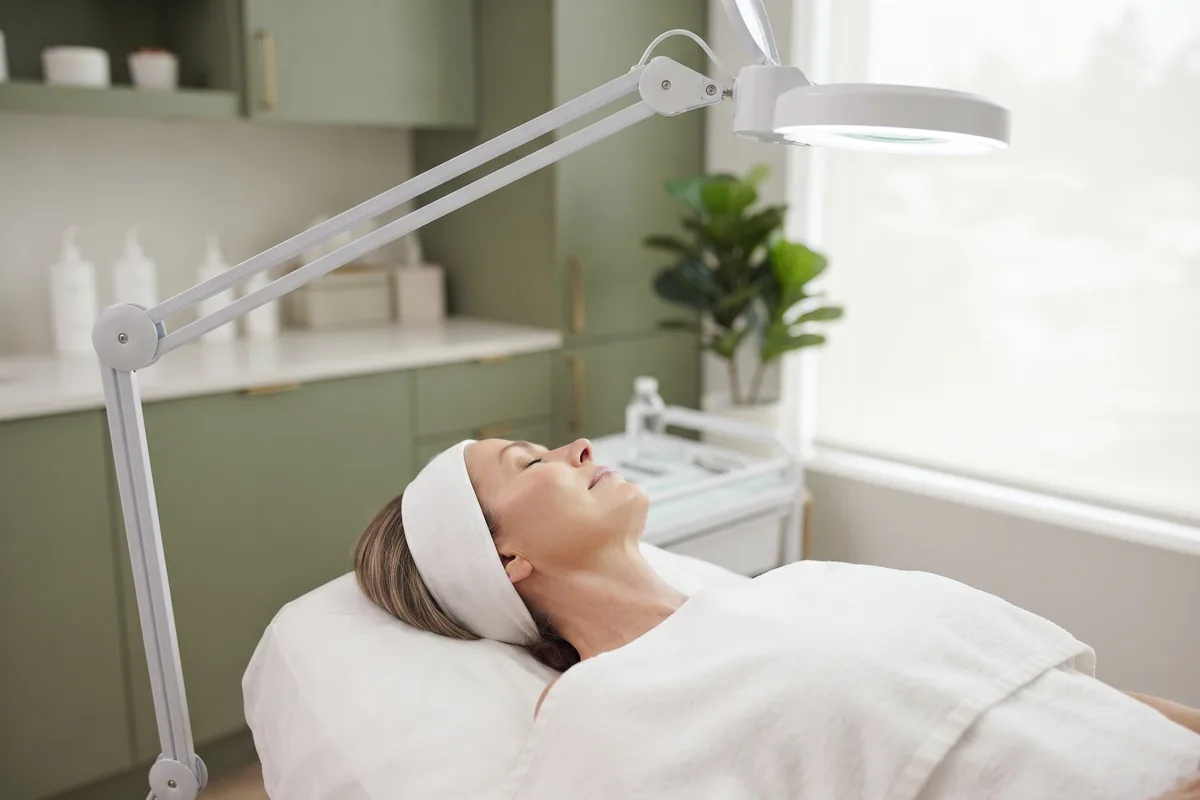
Strong light and magnification make pale and gray hairs visible one by one, which is how they are treated.
Myths About Treating Light Hair
A few ideas circulate online that I hear repeated in consultations.
"Light hair is too fine to treat." Fine hair has a follicle too, and a small probe reaches it. It needs careful work, not a different method.
"Gray hair is permanent, so removal will not hold." Gray is a color change in the hair. The follicle is treated the same way, whatever the shade.
"Dyeing or bleaching the hair first will help." Bleaching does not help electrolysis, and it can irritate the skin you are about to treat. Leave it natural.
"If laser failed, my skin or hair is a problem." The tool had no target. Nothing about you is at fault.
The simplest test is the consultation. I look at the hair and the skin together, and you hear my view in plain language before spending anything.
Checklist: Is Electrolysis a Good Fit for Your Hair?
If most of these are true for you, a consultation is worth booking.
Laser or IPL did little or nothing for your hair, or you were told your hair color is not suitable.
Your hair is blonde, gray, white, red, or a mix of colors on the same area.
You want a permanent result and accept that it takes a series of visits.
You can keep a regular schedule and let hairs grow long enough to be treated.
You are ready to stop waxing, plucking and threading the area.
You have checked with your physician if the growth is sudden or comes with other symptoms.
Before the visit, take a few photos of the area in daylight, then let the hairs grow to a visible length. Daylight photos show me what you see in the mirror at home, and they make it easier to compare progress later. If you have kept notes on past laser sessions, bring the dates and the clinic name. Everything you remember about previous treatment saves time at the consultation.
Questions to Ask Before You Commit, and Your Next Step
These apply to any studio, mine included.
Have you treated light or gray hair before, and under what magnification?
Do you use sterile, single-use probes, opened in front of me?
Which modality will you use on my hair, and why?
Do you give a written plan or estimate after the consultation?
What do you say about results? Be wary of promises about the number of sessions.
If you are comparing a few studios, price per visit matters less than technique. A skilled practitioner needs fewer passes. I covered pricing logic in How Much Does Electrolysis Cost in Orange County?
If laser failed on your hair or you have been told that you are not a candidate, a consultation takes about 30 minutes and is free in the studio. I will look at the hair, tell you what I think, and say plainly if I think another option fits better. See the permanent hair removal page for how the service works, or book your consultation.
If you are not near Irvine, an online consultation is $50, and we can go through photos and a plan.
Frequently Asked Questions
+ Can electrolysis remove gray and white hair?
Yes. Electrolysis treats the follicle with a fine probe and does not depend on hair color, so gray and white hairs are treated the same way as dark ones. It takes a series of visits.
+ Why does laser not work on blonde and red hair?
Laser relies on melanin in the hair to absorb light and turn it into heat. Blonde, red, gray and white hairs contain little or different pigment, so they often absorb too little energy to respond.
+ Is electrolysis safe for fair, sensitive skin?
Electrolysis is a low-risk procedure when done by a trained practitioner with sterile, single-use probes. Fair skin can stay pink for longer afterward, so aftercare and sun protection matter. Discuss medications and skin conditions at your consultation.
+ How many sessions does light hair need?
It varies with hair density, thickness, hormones and your past hair removal. A fair number of light hairs are fine, which can make individual visits quick, but nobody can honestly promise a set number of sessions in advance.
+ Does gray chin hair grow back after electrolysis?
Follicles that are fully treated do not regrow hair. New hairs can still appear from follicles that were dormant, especially while hormones are changing, so a follow-up plan matters. Talk to your physician if the growth is sudden or comes with other symptoms.
+ Does electrolysis hurt more on blonde or gray hair?
Sensation depends more on the treatment area than on hair color. The upper lip is more sensitive than the cheek whether the hair is blonde or black. A topical numbing cream is an option for sensitive zones.
+ Can I bleach or dye facial hair before electrolysis?
It does not help. Electrolysis treats the follicle, so color is irrelevant, and bleach can irritate the skin you are about to treat. Leave the hair natural and ask at the consultation if you have a specific concern.
+ Can electrolysis treat peach fuzz?
It can treat fine hairs one at a time, but treating all the vellus hair on a large area is rarely practical. Most clients choose to treat the hairs that bother them, and the consultation helps you decide which those are.
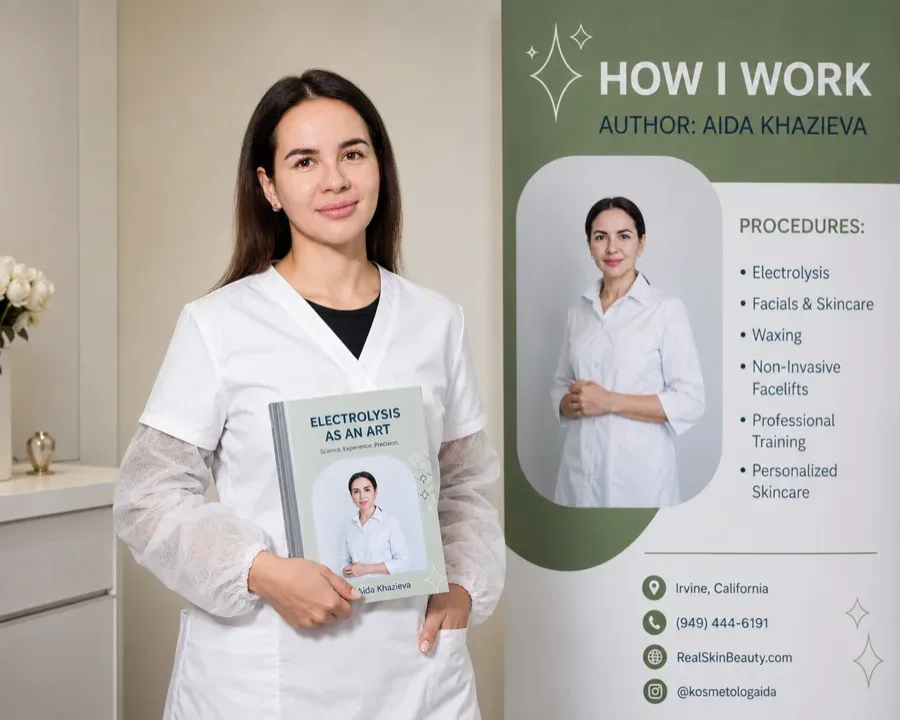
Licensed electrologist and cosmetologist with 20+ years of experience. Aida sees clients at Real Skin Beauty, 18021 Sky Park Circle, Suite N, Irvine, CA 92614.
Book a free consultation with Aida Khazieva at Real Skin Beauty in Irvine, CA. She will examine your blonde, gray or red hair under magnification and give you an honest plan and visit estimate.
This article is for informational purposes and reflects Aida Khazieva's practitioner experience. It does not replace a personalized medical consultation. Individual results vary.
Questions? Aida Answers Them All.
Visit our FAQ or book a free consultation to discuss your specific skin and hair concerns.