Stomach Hair in Women: Causes and Permanent Removal Options
By Aida Khazieva·Electrolysis·14 min read·Real Skin Beauty, Irvine CA·Updated October 20, 2026
Stomach hair in women is common and usually harmless. Most women have fine hair there, and many have a darker line below the navel that comes from genetics and normal androgen sensitivity. Sudden, spreading or coarse growth with irregular periods or acne is worth a doctor visit. For permanent removal, electrolysis is the FDA-recognized method and works on any hair color. Here is how I sort the causes, the options and the steps at my Irvine studio.
Quick answer
Hair on the stomach is a normal variation for most women. A line from the navel down is very common.
New, fast or spreading growth, or growth with irregular periods, acne or scalp thinning, calls for a physician first.
Shaving, waxing and creams are temporary. Laser often misses fine, light and gray hairs.
Electrolysis is FDA-recognized permanent hair removal. The abdomen is priced at the free consultation.
Is Stomach Hair Normal for Women?
Yes, most of the time. Every woman has fine vellus hair on the abdomen, and many have a few darker, longer hairs in a line from the navel down toward the bikini area. That line is often called a happy trail. It is a normal variation in how hair follicles respond to the androgens (hormones such as testosterone) that all women make in small amounts.
Where it becomes a question for a doctor is when the pattern changes: new coarse hair spreading across the stomach, hair that appears together with irregular periods, acne or scalp thinning, or growth that seems to speed up over a few months. Those signs can point to a hormonal cause and deserve a physician visit before any hair removal plan.
I see this concern regularly at my Irvine studio. Clients rarely come in because of a medical worry. They come in because the hair shows through a swimsuit, a crop top or a fitted dress, or because shaving it every other day leaves stubble and irritated skin. This guide explains why abdominal hair grows, how to tell normal from something to check, what each removal method really does on this area, and how electrolysis fits.
One note on scope. I am an electrologist and cosmetologist, not a physician. I can explain what I see and what is generally known, but I do not diagnose hormonal conditions, and I will tell you so when the pattern looks like something a doctor should look at.
Why Hair Grows on the Stomach
Hair on the abdomen comes in two types. Vellus hair is short, soft and nearly colorless. Terminal hair is longer, thicker and pigmented. Under the influence of androgens, some vellus follicles convert to terminal ones. That conversion happens on the chin and upper lip, around the nipples, along the lower abdomen and on the inner thighs, because those follicles are more sensitive to androgens than follicles on the forearm or scalp crown.
Several things can influence how much terminal hair a woman has on her stomach:
Genetics and ethnicity. Family patterns are the strongest predictor. If your mother, aunts or sisters have a lower abdominal line, you are more likely to have one.
Puberty. The lower abdominal line commonly appears in the teen years as androgen levels rise.
Hormonal conditions. Polycystic ovary syndrome (PCOS) is a common cause of increased body and facial hair. Thyroid problems, adrenal conditions and other causes exist as well, and a physician can test for them.
Menopause. As estrogen falls, the balance shifts toward androgens, and some women notice new coarse hairs on the chin, upper lip and abdomen.
Medications. Some medicines, including certain hormonal treatments and others your prescriber knows about, can increase hair growth as a side effect. Never stop a prescription on your own because of hair.
Pregnancy. Hormone shifts can change hair growth during and after pregnancy. A dark line down the abdomen is also common, and fine hair along it can look more noticeable.
If you want the broader picture of why women grow coarse hair on the face and body, I wrote about it in Why Am I Growing Facial Hair?. The abdomen follows the same biology.
Normal Variation or a Reason to See a Doctor?
There is no sharp line, and I never decide it for you. These are general guideposts that help you decide whether to book a medical visit before, or alongside, hair removal.
Pattern
More likely a normal variation
Worth a doctor visit
Location
A thin line from navel to bikini area, or a few hairs around the navel
Thick hair spreading up toward the ribs or across the whole stomach
Many coarse, dark hairs in several areas at once (chin, chest, back, abdomen)
Family history
Relatives with a similar pattern
Family history of PCOS, diabetes or thyroid disease
Doctors sometimes use a scoring system that looks at several body zones, including the lower and upper abdomen, to describe excess hair growth called hirsutism. That is a medical assessment, and it is done by a physician, not in a studio. If you recognize several signs in the right-hand column, book an appointment with your primary care doctor, a gynecologist or an endocrinologist. Electrolysis can still help afterward, because it treats the hair itself, but it does not treat a cause. My article on PCOS versus normal hair growth covers this distinction in more depth, and PCOS and facial hair removal explains how hair removal and medical care work together.
Bring the doctor visit forward if the hair is new and fast. For a stable line you have had for years, there is no medical urgency, and it is simply your call whether the hair bothers you.
Abdominal treatment is private: a towel drape, only the working section exposed, and time to ask questions first.
Shaving, Waxing, Sugaring and Creams on the Abdomen
The abdomen has soft skin that stretches and moves as you sit, bend and breathe. That shapes how each temporary method behaves here.
Method
How long it lasts
Common problems on the stomach
Best for
Shaving
Usually 1 to 3 days before stubble shows
Razor bumps, nicks near the navel, itch as hair regrows blunt
Quick cleanup before an event
Waxing or sugaring
Often 3 to 6 weeks
Ingrown hairs, redness, breakage when hair is fine or skin is slack, pain over the lower belly
Large areas with moderate hair
Depilatory cream
A few days
Chemical irritation, allergic reactions, strong smell; patch test needed
Occasional use on skin that tolerates it
Threading
Weeks, but impractical for a large area
Time consuming, painful for sensitive skin
Tiny areas such as a few hairs near the navel
Plucking
Weeks per hair
Tedious, causes ingrown hairs and tiny marks if done often
A handful of stray hairs only
Electrolysis
Treated follicles are permanently disabled; new hairs from other follicles still appear over time
Redness and small scabs for a day or two
Anyone who wants the area to stay clear
A few practical points. Pulling hair out by the root, with wax, tweezers or an epilator, gives you a smoother feel for longer, but it also makes the hair unavailable for electrolysis until it grows back. If you already know you want permanent removal, I ask you to stop waxing and plucking before your first visit. I explain the reasoning in Can You Shave, Pluck or Wax Between Electrolysis Sessions?.
Shaving does not change the thickness or color of your hair. The blunt tip just feels coarser as it grows out. That myth is old and it still circulates, so I mention it whenever someone tells me they avoid shaving for that reason.
If you use waxing or sugaring around a c-section scar or recent surgery, ask your surgeon how long to wait. Skin over a healing scar is fragile and should not be pulled.
Why Laser Often Struggles With Abdominal Hair
Laser and intense pulsed light work by targeting pigment in the hair. They tend to do their best work on dark hair on light skin. Abdominal hair in women is often a mix of dark terminal hairs and lighter, finer ones, and the finer ones may not respond. Gray, blonde and red hair has little pigment for the light to find at all, and I cover that in Electrolysis for Blonde, Gray and Red Hair That Laser Cannot Treat.
There is a second issue. Laser can reduce hair, and many clients are happy with it, but the FDA describes laser as permanent hair reduction, not permanent removal. For women with a hormonal driver, hairs that were dormant can switch on later, and some treated areas see fine hairs thicken instead. I wrote about that effect in More Hair After Laser?.
If laser works well for your hair and skin, it is a reasonable option, and I will say so. A fair comparison, including cost, is in Electrolysis vs Laser. If you have already tried laser and some hairs remain, those leftover hairs are exactly what electrolysis is for.
How Electrolysis Works on the Abdomen
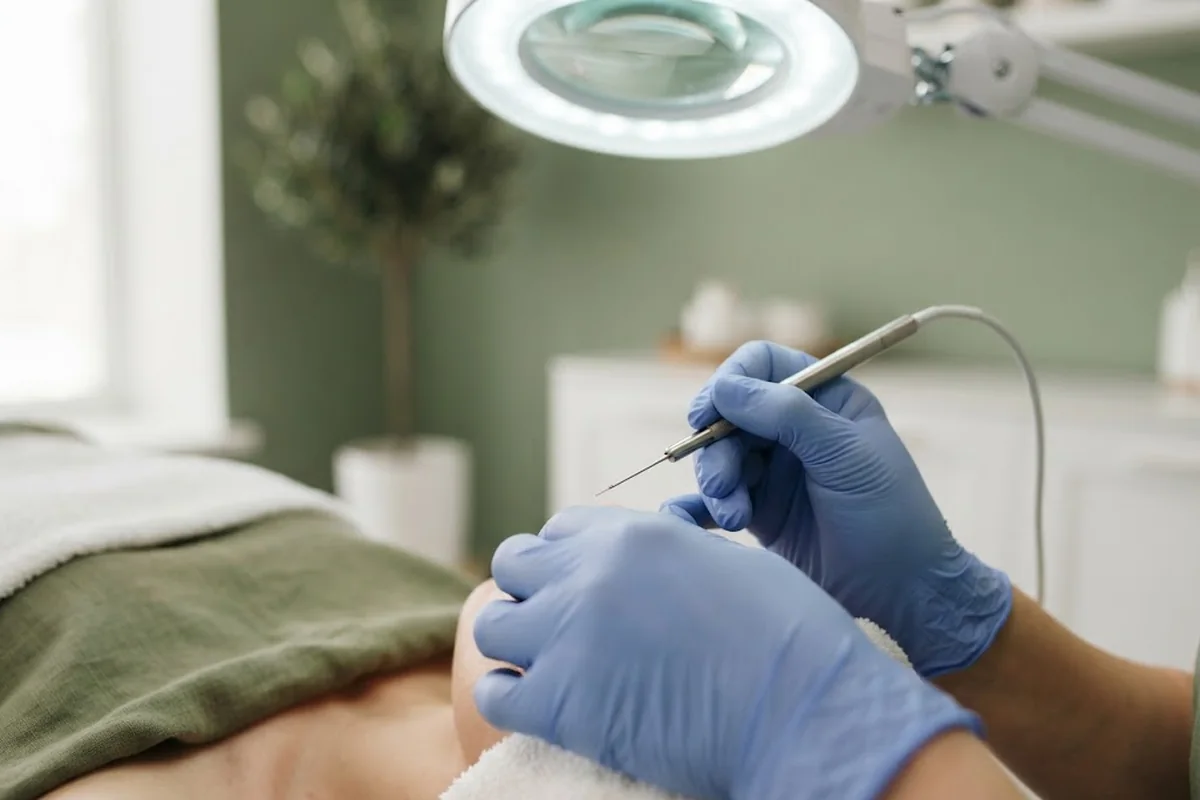
Electrolysis is FDA-recognized permanent hair removal. A fine, sterile, single-use probe slides into the follicle alongside the hair, and a small amount of current disables the follicle's ability to grow hair. Because it targets the follicle and not the pigment, it works on any hair color and most skin tones. I explain the three modalities in Galvanic, Thermolysis or Blend, and I choose among them based on your hair and how your skin responds.
On the abdomen, a few things shape the treatment:
Hair direction is variable. Hairs around the navel and along the midline often grow in different angles. I follow each one, and it makes the work slower than on a uniform area.
Growth stages differ. At any moment only a portion of follicles hold a visible hair. The rest surface later. This is why electrolysis is a series of visits, not a single session. See how many sessions you may need.
Skin sensitivity changes along the area. The lower abdomen near the bikini line is usually more sensitive than the upper stomach. I adjust settings as I move. Numbing cream is an option, and I ask you to raise it ahead of time.
Tiny marks are possible. Redness and small scabs around treated follicles for a day or two are normal. Picking them is the main way people turn a routine session into a lasting mark.
Abdominal hair is typically sparse compared with a beard or a bikini area, so a visit can cover a meaningful section. Because the number of hairs, their depth and your skin all differ, I cannot give a session count without seeing you. The honest answer at a consultation is a range and a plan that I adjust as the hair thins.
Each hair is treated individually with a fine sterile probe, followed under magnification.
What Treatment Looks Like and What It Costs
A first visit begins with a free in-studio consultation of about 30 minutes. I examine the hair under magnification, ask about your health history, medications and previous hair removal, and look at your skin. An online consultation is $50 if you are outside Orange County. If you tell me the hair is new or you have other symptoms, I will ask you to see a physician first, and I would rather say that early than later.
The abdomen does not have its own line on my price list, so I quote it at the consultation, based on the size of the area you want treated and how much time it will need. For orientation, here are the zones near it that do have set prices:
Zone
Visit length
Price per visit
General facial zone
30 min
$75
Underarm
45 min
$90
Chest and decollete
45 min
$100
Bikini
1 hr
$110
Brazilian
1 hr
$130
Back
1 hr
$120
I include these only so you can see how pricing works at the studio: electrolysis is priced by the visit, according to time, not by the hair. For the full list and a worked example of the arithmetic, see How Much Does Electrolysis Cost in Orange County?. The bikini electrolysis page is useful if your lower abdominal line continues into the bikini area, since many clients treat both together.
Clients from Irvine, Tustin, Costa Mesa, Newport Beach and the rest of Orange County book short, regular visits because the sessions are brief and recovery is quick.
Preparing for an Abdominal Electrolysis Visit
Preparation is simple, but it matters for results and comfort.
Stop waxing, sugaring and plucking. Allow hair to grow to a length I can treat. Ask me for a number of days for your hair type when you book.
Trim if the hair is very long. If it is long enough to tangle, a light trim helps. Ask before you shave.
Skip active skincare on the area. No retinol, acids or scrubs for 48 hours before. This applies to body products too.
Wear loose, soft clothing. A tight waistband sits right on treated skin and rubs it afterward.
Eat beforehand and limit caffeine. Low blood sugar and caffeine both make sensation feel stronger.
Tell me about scars, surgery and pregnancy. A c-section scar, hernia repair or recent abdominal surgery changes how I treat nearby skin.
Plan your day. Avoid hot yoga, saunas, swimming pools and sun on the area for the first 24 hours.
For many women the abdomen is a private area, and I treat it that way. You are draped with a towel, only the section I am working on is exposed, and you can pause at any time. If you prefer to bring a friend to the consultation or want to ask questions first, that is fine.
Aftercare and What Is Normal
After a session the treated area is usually pink with small raised dots at the follicles. Some people notice tenderness when clothing rubs the skin. Tiny scabs may form over one to three days. The routine is gentle:
Keep the area clean. Wash with lukewarm water and a mild cleanser.
Do not pick, scratch or scrub scabs. Let them fall off.
Avoid heat, intense workouts, saunas, tanning and swimming pools for the first 24 hours, or as I advise.
Wear soft, loose cotton for a day or two.
Use sunscreen on exposed treated skin once it has healed, since irritated skin can pick up pigment in the sun.
Skip exfoliants, retinoids and shaving over scabs until the skin has calmed.
Call me if you see pus, spreading redness, blistering, worsening swelling after two days or fever. These are uncommon, but they need prompt attention. The complete routine is in Electrolysis Aftercare.
Soft loose cotton, a mild cleanser and sunscreen once healed are the whole aftercare kit.
Special Situations: Pregnancy, Scars, Medications and Hormones
Some circumstances change the plan or the timing.
Situation
What I do
What you should do
Pregnant or possibly pregnant
I ask for your doctor's approval first, and many practitioners postpone. Hair that appears during pregnancy often changes afterward.
Ask your obstetrician. Do not start abdominal treatment without clearance.
C-section or surgical scar
I avoid working on fragile or healing skin and treat only mature skin.
Ask your surgeon when the scar is ready for any treatment.
PCOS or other hormonal diagnosis
I treat the hair you have now and expect that new hairs may appear while the cause is active.
Keep up with medical care. Hair removal is a complement.
Isotretinoin or other skin-thinning medication
I ask for dates and usually wait.
Check with your prescriber.
Pacemaker or implanted device
I do not treat until a cardiologist has weighed in.
Tell me before booking.
Keloid scarring
I avoid or modify treatment, because follicle injury can trigger raised scars.
Mention it at the consultation.
Hormone-related growth is the case where plans change most. If the cause is still active, electrolysis clears the hairs that exist, and new ones may need treatment later. Clients with PCOS often plan for a longer series with maintenance visits. I describe what that looks like in electrolysis for PCOS and in the page on hormonal hair growth.
Myths I Hear About Stomach Hair
A few beliefs come up so often that they deserve a direct answer.
"Shaving made my hair darker." Shaving leaves a blunt tip that looks darker and feels stiffer for a few days. The follicle underneath has not changed.
"Only women with a medical problem grow stomach hair." Many women with regular cycles and no diagnosis have a lower abdominal line. It is common, and it is not a sign that something is wrong by itself.
"Hair removal causes more hair." Waxing and electrolysis do not stimulate new follicles. If new hairs appear, they usually come from follicles that were already there and were switched on by hormones, age or medication.
"Laser is permanent, so electrolysis is unnecessary." Laser can reduce hair a great deal when hair and skin suit it, but the FDA calls it permanent reduction. Fine, light and gray hairs often remain, and electrolysis handles those.
"I should wait until the hair is really long." Very long hair is not required. A few days of growth after the last wax or pluck is usually enough, and I will tell you the exact length for your hair.
If you are unsure which of these applies to you, bring photos of the area, any recent blood test results you are comfortable sharing, and a short list of what you have tried. It makes the consultation more useful, and it saves you from paying for steps that do not fit your situation.
A Decision Checklist: Which Route Fits You?
Use this list to decide your next step. Tick the statements that apply.
The line has been the same since my teens. A free consultation and a plan fit well.
The hair is new, spreading or comes with irregular periods or acne. See a physician first, then plan removal.
I shave every day or two and get bumps. Consider moving from shaving to permanent removal.
I have light or gray hairs that laser missed. Electrolysis is built for them.
I want a quick fix for one event. Shaving or careful trimming works, and no commitment is needed.
I have a scar or recent surgery nearby. Ask your surgeon before any hair removal.
I am pregnant or trying to become pregnant. Talk to your physician and postpone abdominal treatment.
Whatever the answer, you do not need to decide the whole plan today. The consultation is free in the studio, and there is no pressure to book. If you want to read more first, the electrolysis page explains the service, and permanent hair removal covers what permanent means in practice. When you are ready, book a free consultation.
Frequently Asked Questions
+ Is it normal for women to have hair on their stomach?
Yes. Fine hair is universal, and a thin line of darker hair from the navel downward is a common variation. See a physician if the growth is new, spreading, or comes with irregular periods, acne or scalp thinning.
+ Why am I suddenly growing hair on my stomach?
Sudden or fast growth can come from hormonal shifts, PCOS, thyroid conditions, menopause or certain medications. A physician can check the cause. Do not stop any prescription on your own.
+ Does shaving stomach hair make it grow back thicker?
No. Shaving cuts the hair at the surface and does not change the follicle. The blunt tip can feel coarser as it grows out, which is why the myth persists.
+ Can electrolysis remove stomach hair permanently?
Electrolysis is FDA-recognized permanent hair removal. It disables each treated follicle. New hairs can appear from other follicles, especially if hormones are active, so a series of visits is normal.
+ How much does abdominal electrolysis cost?
The abdomen is quoted at the free consultation, based on the area and the time needed. Nearby zones have set prices, for example $110 for the bikini area and $90 for the underarm, per visit.
+ Does laser work on stomach hair?
It can work on dark hair on light skin. It is less effective on fine, light, gray or red hair, and the FDA describes laser as permanent reduction, not permanent removal.
+ Can I get electrolysis on my stomach while pregnant?
I do not recommend starting. Many practitioners postpone, and galvanic current is generally avoided. I ask for your doctor's approval first. Discuss timing with your obstetrician.
+ How should I prepare my stomach for electrolysis?
Stop waxing and plucking so hair is long enough to treat, skip retinol and acids for 48 hours, wear loose clothing and tell your electrologist about scars, surgery and medications.
Licensed electrologist and cosmetologist with 20+ years of experience. Aida sees clients at Real Skin Beauty, 18021 Sky Park Circle, Suite N, Irvine, CA 92614.
Book a free consultation with Aida Khazieva at Real Skin Beauty in Irvine, CA. She will look at your hair under magnification, explain your options honestly and quote the abdomen for your area.
This article is for informational purposes and reflects Aida Khazieva's practitioner experience. It does not replace a personalized medical consultation. Individual results vary.
Questions? Aida Answers Them All.
Visit our FAQ or book a free consultation to discuss your specific skin and hair concerns.