Hyaluronic Acid: How to Use It So It Actually Hydrates
By Aida Khazieva·Facials and Skin Care·15 min read·Real Skin Beauty, Irvine CA·Updated October 19, 2026
Hyaluronic acid hydrates when you put it on slightly damp skin and then seal it with a moisturizer. It is a humectant, which means it attracts water but does not create it. Used on dry skin in a dry room with no moisturizer on top, it can feel disappointing. Used in a layered routine, it plumps the surface, softens fine lines caused by dehydration and helps the skin feel comfortable all day. Here is how I explain the method to clients in Irvine.
Quick answer
Apply it to damp skin, right after cleansing or a mist of water, then cover it with a moisturizer to hold the water in.
It is a humectant: it holds water near the skin. It does not add oil and does not replace a moisturizer.
Different molecular weights act at different depths. A mix of sizes is the easiest choice for beginners.
Suitable for most skin types, including oily and acne-prone. Patch test if you are sensitive.
What Hyaluronic Acid Is and Why It Gets So Much Attention
Hyaluronic acid (also called hyaluronan or sodium hyaluronate in ingredient lists) is a sugar molecule that your body already makes. It sits in the skin, joints and eyes, where its job is to hold water and keep tissue cushioned. In skin, the amount of natural hyaluronic acid falls with age, sun exposure and smoking, which is one reason mature or sun-damaged skin looks flatter and feels drier.
In skin care, hyaluronic acid is made by fermentation and added to serums, moisturizers, masks and mists. It has three properties that matter to you:
It attracts water. It is a humectant, like glycerin. It binds water molecules and holds them in the upper layers of the skin.
It feels light. Even a rich-feeling product does not leave an oily film, so it is popular for oily and combination skin.
It is well tolerated. Reactions are uncommon. When people sting, the cause is often an alcohol, fragrance or preservative in the same formula.
What it is not: an exfoliant, a lifting ingredient or a replacement for botox and fillers. Injectable fillers contain a heavily cross-linked form of the same molecule, but a topical serum cannot do the same job. A serum improves hydration at the surface and in the top layers. It can make skin look plumper and smoother for hours or days. It does not rebuild volume.
If you want the bigger picture of where a hydrating serum fits, my beginner skin care routine walks through cleanser, treatment, moisturizer and sunscreen in order.
How Hyaluronic Acid Works: Humectants, Water and the Seal
Think of hyaluronic acid as a sponge. A sponge holds water well, but it must have water available to hold. That is the most important point in this entire guide. The humectant draws water from two places: the air around you, and the deeper layers of your skin. In a humid climate, it takes water from the air and your skin feels dewy. In very dry conditions, there is less water in the air, so the molecule may pull more from the lower skin layers, which is the opposite of what you want.
Practical consequence: you must provide water, and you must close the door afterward. That means two things.
Apply to damp skin. A slightly wet face gives the humectant water to bind.
Seal with a moisturizer. A cream or lotion contains oils and occlusives that slow water loss, so the hydration stays instead of evaporating.
Southern California makes this easier than many places, but it also tricks people. Irvine and the rest of Orange County can feel mild and fresh, yet indoor air conditioning, offshore Santa Ana wind days and long hours in the car can leave the air very dry. I see clients with tight, papery skin in autumn who swear they moisturize. Usually the missing step is the damp application and the seal.
Condition
What happens to a hyaluronic serum
What to do
Skin damp, moisturizer on top
Water is drawn in and held
This is the target method
Skin dry, no moisturizer
Little water to bind, may feel tight
Add water first, add cream after
Humid weather
Pulls water from the air, skin feels dewy
Light gel moisturizer is enough
Dry air or heating, no seal
May draw water from deeper layers and lose it to the air
Use a richer cream and a humidifier if possible
The idea that hyaluronic acid can dehydrate skin is debated, and the real-world effect depends on formula, climate and what else you apply. The safe approach is the same either way: damp skin, then a sealing layer.
Molecular Weights: High, Low and Everything Between
You may have seen terms like "multi-weight" or "low molecular weight" on labels. Hyaluronic acid comes in different sizes, and size influences where it sits.
Type
Size
Where it acts
What it feels like
High molecular weight
Large
On the surface, forming a thin film that holds moisture
Silky, smooth, instant softness
Medium molecular weight
Medium
In the upper layers of the skin
Plump feel, steady hydration
Low molecular weight
Small
Penetrates deeper into the outer skin layer
Longer-lasting hydration, may be more irritating on sensitive skin in some formulas
Sodium hyaluronate
Small, salt form
Absorbs well, used in many serums
Light, quick hydration
Hydrolyzed hyaluronic acid
Very small fragments
Deeper penetration of the outer layers
Subtle benefit; check tolerance if skin is reactive
Marketing claims about depth can be overstated. The skin barrier is built to keep large molecules out, so even the smallest forms act mostly in the upper layers. For a beginner, a serum with several weights is a practical choice, and a plain one-weight product is fine too. Do not spend more because a label promises deeper penetration. Spend time on application and the moisturizer that follows.
On this topic, if your skin is sensitive or you have just had a peel, skip tiny-fragment formulas and stick to a basic hyaluronic serum with few other ingredients. Calm, damp skin tolerates almost any version. Inflamed skin does not.
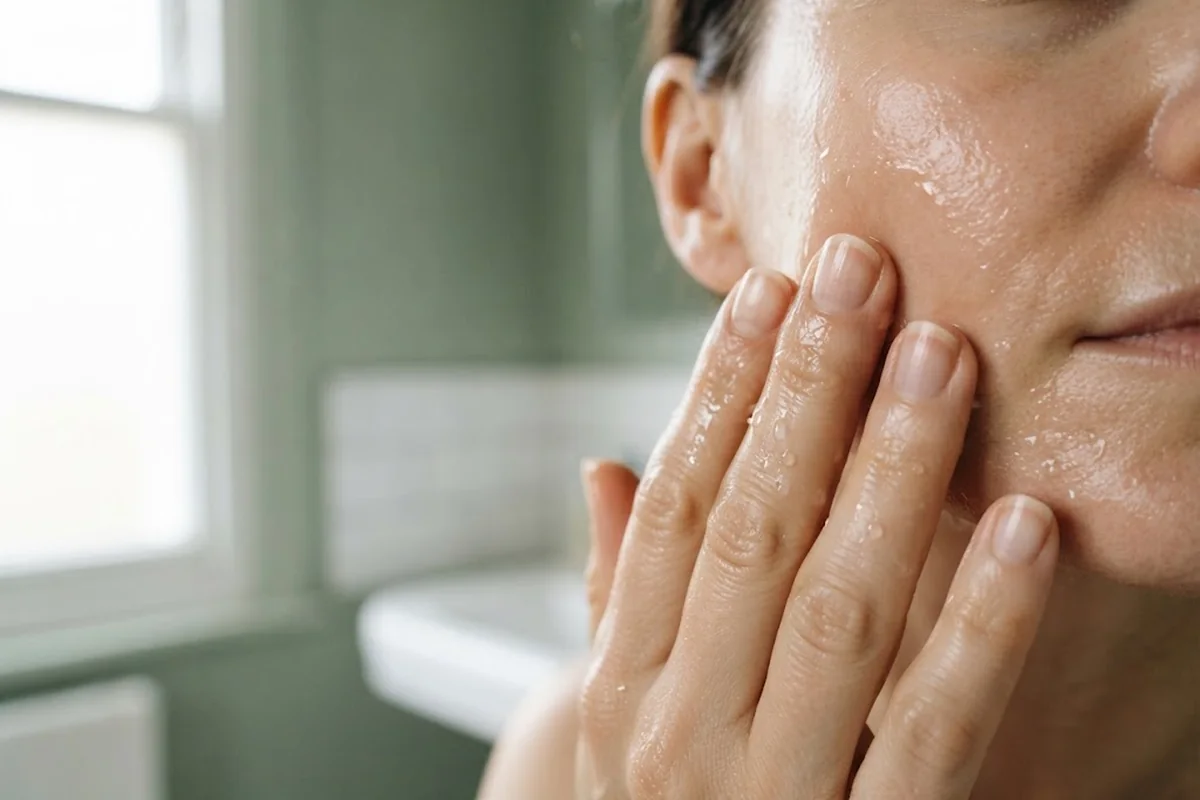
Hyaluronic acid works best pressed into slightly damp skin, not rubbed onto a dry face.
How to Apply Hyaluronic Acid Step by Step
This is the method I teach clients in the treatment room and at consultations.
Cleanse with a gentle cleanser. Rinse well with lukewarm water.
Leave the skin damp. Pat once with a towel so water is not dripping, or spritz a little water or a hydrating mist.
Apply a few drops of serum to your palms, press onto the face and neck, and use your fingertips for the area around the eyes.
Apply other serums such as niacinamide or vitamin C, thinnest texture first.
Seal with moisturizer while the skin still feels slightly tacky.
Morning only: sunscreen as the final layer.
Use it twice a day if you like. Once in the evening is enough for many people, and dry skin benefits from both. A pea-sized to dime-sized drop is plenty. If a serum balls up or leaves a sticky film, you are using too much or applying it to bone-dry skin.
Where hyaluronic acid sits among other products
It goes after cleansing and before heavier products. If you use vitamin C in the morning, apply the vitamin C first on clean skin, then hyaluronic acid, then moisturizer and sunscreen. If you use retinol in the evening, hyaluronic acid before or after is both fine. Many people apply a hydrating layer before retinol to reduce irritation. Hyaluronic acid does not conflict with other actives and is one of the few ingredients that mixes with nearly all of them.
Masks, mists and sheet products
Hyaluronic masks and mists are pleasant and can be useful for a short boost before an event or after a long flight. Do not leave sheet masks on until they dry out, because dry paper pulls water back. Take them off while they are still moist, press in the leftover essence and finish with moisturizer.
Dry Skin vs Dehydrated Skin: Why It Matters for Hyaluronic Acid
Hyaluronic acid treats a lack of water. A lack of oil is a different problem. The two often overlap, and mixing them up leads people to buy the wrong product.
Dehydrated skin lacks water. It can be oily, normal or dry in type. It looks dull, feels tight after cleansing, shows fine surface lines and may still get shiny and congested.
Dry skin lacks oil (lipids). It feels rough and flaky, and it feels uncomfortable most of the time, not just after washing.
Dehydrated skin often responds quickly to hyaluronic acid plus a moisturizer. Dry skin needs hyaluronic acid and a richer cream or oil. I explain how to tell them apart in a separate article on dry vs dehydrated skin, and the best professional options for very dry skin are in the best facial for dry skin.
Oily skin that feels tight is a classic dehydration case. People strip their face with strong cleansers, the surface loses water, and the glands add more oil. A hyaluronic serum, a gentler cleanser and a light gel cream often fix that cycle in a few weeks.
Who Benefits Most and Who Should Be Careful
Almost any skin type can use hyaluronic acid. Here is how I think about each situation.
Skin situation
Does it help?
Notes
Oily or acne-prone
Yes
Light texture, non-comedogenic in most formulas. Avoid heavy creams over it
Dry or flaky
Yes, with a rich seal
Pair with cream or oil. Humectant alone will not fix dryness
Mature skin
Yes
Helps fine dehydration lines and a plumper surface. Combine with retinol and sunscreen for long-term change
Sensitive or rosacea
Usually yes
Choose fragrance-free, simple formulas. Patch test first
The few people who struggle are those who react to preservatives, fragrance or alcohol in a specific product. If you see itching, burning or swelling, wash it off and see a physician. A patch test on the inner forearm or behind the ear for two or three days is a good habit with any new serum.
Hyaluronic Acid at Home vs Professional Hydrating Treatments
Home products are the foundation. Professional treatments can add a boost on top. They do different jobs.
Cleansing, exfoliation, extraction and serum infusion in one visit
Congested skin that is also dehydrated
Sheet or gel masks at home
Short-term comfort
Before events, after travel
A professional facial does not replace home care. It resets the skin so your serum and moisturizer work better. The reverse is also true: a spa facial helps for a week or two, but dehydration returns if the routine at home does not support it. Clients in Irvine, Newport Beach and Tustin usually ask for a facial before an event. That is a reasonable use. For lasting change, the daily routine matters more.
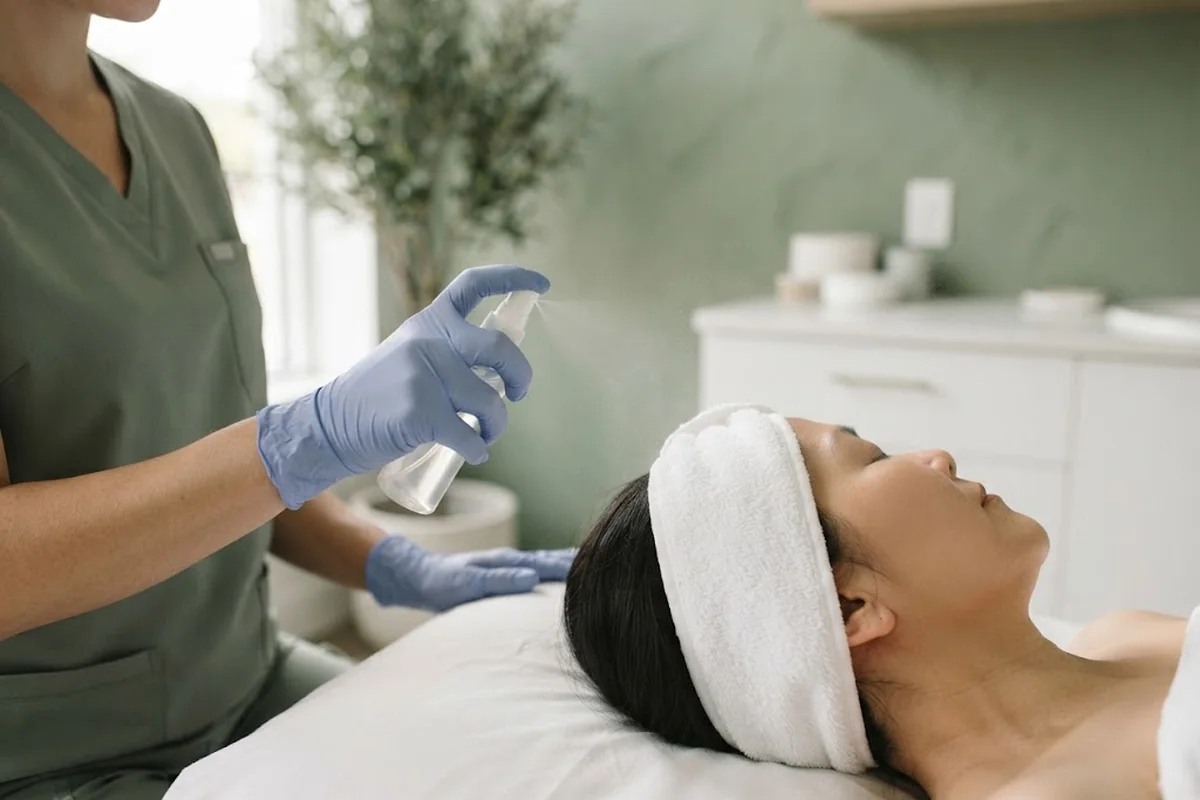
In a hydrating facial, water and humectants go on first and a sealing layer follows.
Common Mistakes That Make Hyaluronic Acid Disappointing
Applying to a dry face. The serum has no water to bind. Spritz or leave the skin damp.
Skipping moisturizer. Without a seal, the water can evaporate or be drawn out. Always cover it.
Using it as the only product. It hydrates. It does not protect, repair a damaged barrier or exfoliate.
Too much product. A thick layer gets sticky and rolls into pills under makeup.
Ignoring the environment. Dry heater air and airplane cabins can undo a good routine. A humidifier at night helps.
Over-cleansing or over-exfoliating. Strong cleansers and frequent acids deplete the water you are trying to add.
Expecting filler results. A topical serum will not lift or fill. It improves the surface.
Chasing the lowest molecular weight. Smaller is not always better, particularly for sensitive skin.
One more thing I see a lot: people add hyaluronic acid while still using harsh scrubs and strong foaming cleansers. The skin loses water as fast as it takes it in. If your skin has been tight and flaky for a while, fix the subtraction before adding more. Swap the cleanser, drop the scrub for two weeks, and see what happens.
Myths and Facts About Hyaluronic Acid
Claim you may have heard
What is closer to the truth
It holds 1,000 times its weight in water, so it will flood your skin
The figure comes from laboratory conditions. On the skin, the amount of water it holds depends on how much water is available and how well you seal it
It can replace moisturizer
It cannot. It attracts water but does not prevent it from evaporating. A moisturizer does that
It is only for dry skin
Oily and combination skin can be dehydrated too, and often benefit most from a light humectant
It plumps wrinkles like filler
It plumps the surface temporarily by hydrating it. Deeper lines need other approaches
A higher percentage is better
Many serums are effective at around 1 to 2 percent. Texture and the rest of your routine matter more
You cannot use it with acids
You can. Apply acids first on clean skin, then hyaluronic acid, then moisturizer
The last point comes up in almost every consultation. People are told to keep their products apart, and then they apply one thing a day and wonder why nothing changes. Hyaluronic acid is among the most forgiving ingredients in your cabinet. It is a good partner for stronger products precisely because it softens their drying effect.
After exfoliation, peels and hair removal
Freshly exfoliated skin loses water more easily. After a glycolic or lactic peel, a plain hyaluronic serum and a simple moisturizer are the right tools once peeling and stinging have passed, as described in the peel recovery timeline. After facial electrolysis, I advise clients to keep the treated area clean and gentle until scabs fall off, then return to the usual routine. If your skin feels tight after any treatment, apply a hydrating layer to damp skin, seal it, and avoid anything that stings.
Consistent hydration also helps makeup sit better. Clients who struggle with foundation clinging to flaky patches often find that a week of damp-skin hyaluronic application and a richer night cream smooths the surface more than any primer does.
What to Look for on the Label
You do not need brand advice to choose well. You need to read the ingredient list.
Look for hyaluronic acid, sodium hyaluronate or hydrolyzed hyaluronic acid in the first third of the list.
Look for supporting humectants such as glycerin and panthenol, which pair well with it.
Look for barrier lipids in your moisturizer, such as ceramides, cholesterol and fatty acids.
Avoid, if you are reactive, added fragrance, essential oils and high amounts of denatured alcohol.
A short ingredient list is not automatically better, but it is easier to troubleshoot.
Price does not predict performance in this category. A plain, inexpensive hyaluronic serum with a good moisturizer on top often does as much as a luxury version. Pay for texture and comfort if you like them. Do not pay extra for claims you cannot verify.
A Week of Hydration: Sample Routines
Morning
Rinse or cleanse gently. While the skin is damp, apply hyaluronic serum. Add vitamin C or niacinamide if you use them. Moisturize. Finish with sunscreen, because well-hydrated skin still needs sun protection and hydrated skin shows sun damage as quickly as dry skin does.
Evening
Remove makeup and sunscreen with a gentle cleanser. Skin damp. Hyaluronic serum. Treatment product if you use one, such as retinol on its scheduled nights. Moisturizer. On dry nights, a thin layer of a richer cream or balm over the top.
Once or twice a week
A hydrating mask for 10 to 15 minutes. If you exfoliate, do it on the same night or the evening before, then follow with extra hydration. Exfoliated skin takes up moisturizers more quickly, but it also loses water faster.
During travel or dry weather
Use a mist or rinse more often, add a face oil or balm over your moisturizer, and drink water. Water intake matters for your body, but drinking more will not fix a skin barrier problem on its own.
When to See a Professional
If the skin stays tight, flaky, itchy or red after four weeks of a consistent routine, something else is going on. It could be a damaged barrier, eczema, contact dermatitis, rosacea or a reaction to an ingredient. A physician or dermatologist should evaluate rashes, persistent itching or any skin that burns or cracks.
For skin that is simply dull and dehydrated, an esthetician can find the cause. At my Irvine studio, I check the skin under magnification, ask about your products, cleansers and climate, and choose treatments that match. Usually the answer includes a simpler routine, one hydrating facial to reset, and a plan to keep it going. You can book a free consultation to start, or read the facial overview first.
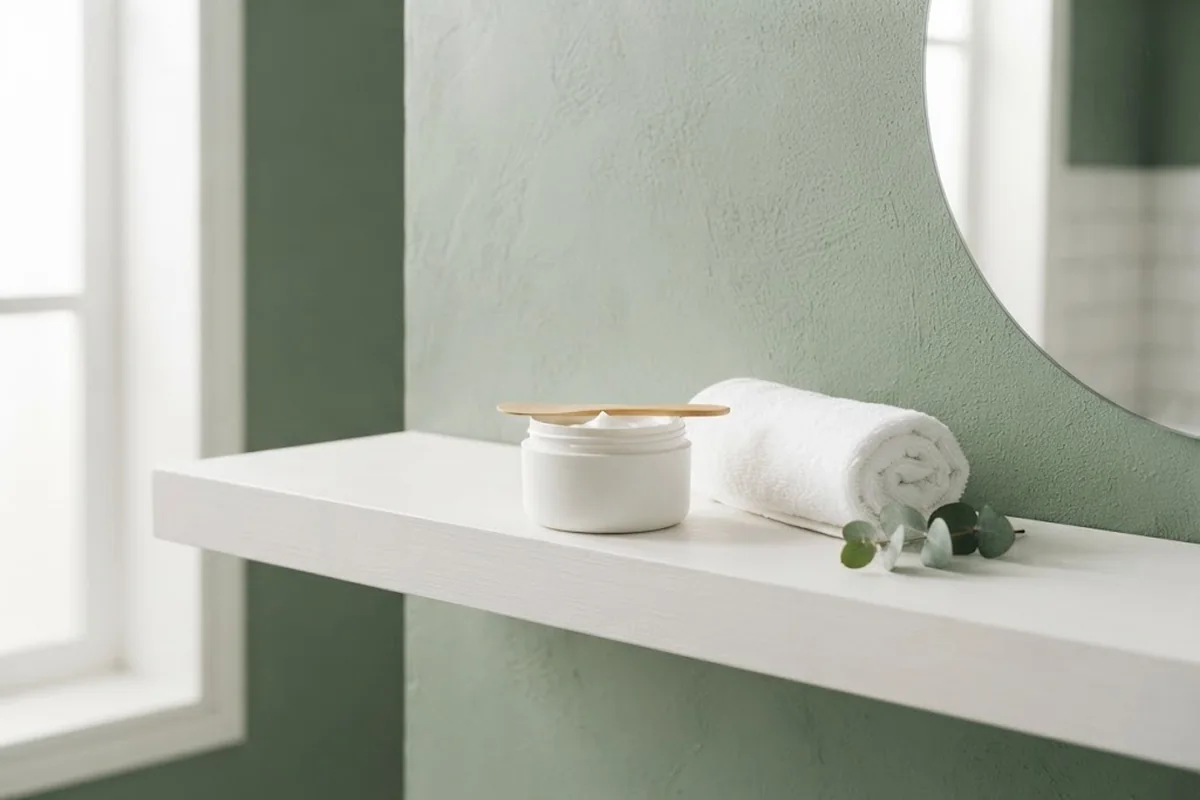
A plain moisturizer is the sealing layer that keeps the water from a humectant on the skin.
Frequently Asked Questions
+ Does hyaluronic acid really hydrate the skin?
Yes, as a humectant it attracts and holds water in the upper layers of the skin. It works best on damp skin with a moisturizer applied on top to hold that water in.
+ Should I apply hyaluronic acid to wet or dry skin?
Apply it to slightly damp skin, right after cleansing or after a light mist of water. On completely dry skin it has little water to bind and can feel tight.
+ Can I use hyaluronic acid with vitamin C, niacinamide and retinol?
Yes. Hyaluronic acid does not conflict with these ingredients. Apply the thinnest textures first, and introduce one new active at a time so you can spot any irritation.
+ Can hyaluronic acid dry out your skin?
In very dry air, a humectant used without a moisturizer may pull water from deeper skin layers, though this is debated. Applying it to damp skin and sealing it with a moisturizer avoids the problem.
+ Is hyaluronic acid good for oily or acne-prone skin?
Yes. It is light, oil-free and helps with dehydration that can accompany oily skin. Choose a fragrance-free formula and a lightweight gel moisturizer to seal it in.
+ Does the molecular weight of hyaluronic acid matter?
Larger molecules sit on the surface and give a smooth feel, while smaller ones act in the upper layers. Serums with several weights are a practical choice. Smaller is not always better for sensitive skin.
+ How often should I use hyaluronic acid?
Once or twice a day works for most people. Morning and evening is fine for dry or dehydrated skin. Use a small amount, and always follow with a moisturizer.
+ Does hyaluronic acid work like a filler?
No. Injectable fillers use a cross-linked form to add volume under the skin. A topical serum improves surface hydration and can make skin look plumper for a while, but it does not add volume.
Licensed electrologist and cosmetologist with 20+ years of experience. Aida sees clients at Real Skin Beauty, 18021 Sky Park Circle, Suite N, Irvine, CA 92614.
Book a free consultation with Aida Khazieva at Real Skin Beauty in Irvine, CA. She will look at your skin under magnification and tell you what it is missing.
This article is for informational purposes and reflects Aida Khazieva's practitioner experience. It does not replace a personalized medical consultation. Individual results vary.
Questions? Aida Answers Them All.
Visit our FAQ or book a free consultation to discuss your specific skin and hair concerns.