Can You Get Electrolysis on Your Period? Timing, Comfort and Bikini Tips
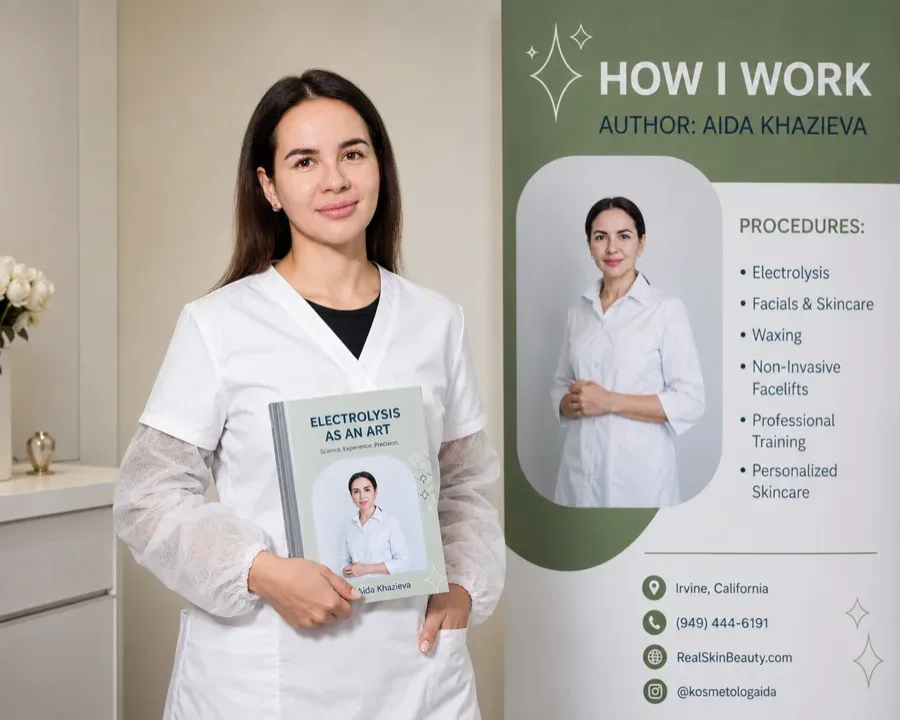
By Aida Khazieva·Electrolysis·17 min read·Real Skin Beauty, Irvine CA·Updated October 22, 2026
Yes, you can get electrolysis on your period. Menstruation does not change how the treatment works or heals. Many people feel more sensitive just before and during the first days of a period, so I often suggest the week after it ends for long or sensitive sessions. For bikini work, wear a tampon or menstrual cup.
Quick answer
Electrolysis works the same on any day of your cycle; only comfort may change.
Many people are more sensitive in the premenstrual days and the first days of bleeding.
The week after your period, roughly days 7 to 14 of a typical cycle, is often the most comfortable.
Bikini line work is possible with a tampon or cup; many prefer to move a full Brazilian.
Rescheduling for strong cramps or feeling unwell is completely normal.
The Short Answer: Yes, With a Little Planning
Having your period is not a reason you cannot have electrolysis. Menstruation does not change how the probe works, how the follicle responds to current or how your skin heals afterward. What it can change is how the treatment feels. Many people notice that their skin and nerves are more reactive in the days just before and during the first days of a period, so the same setting that felt easy two weeks ago can feel sharper.
That is why my answer always has two parts. Medically and technically, you can be treated. Practically, you may enjoy the session more if you book it for the week after your period ends. If your only free morning falls on day two of your cycle, we can still work, and I will adjust the pace and comfort measures to how you feel that day.
There is one more practical point. For bikini and Brazilian work, a period adds logistics: a tampon or menstrual cup, a little extra draping and some planning around timing. None of this is a problem for a professional studio. It is simply something to think about when you book.
What a period does not change
The method: a fine sterile probe slides into the natural opening of the follicle, and a small amount of energy treats the growth cells.
Hygiene: probes are single use and the area is cleaned the same way on any day.
Results: the follicle does not care what day of your cycle it is. Treatment quality depends on technique, settings and the stage of growth of each hair.
Aftercare: the same gentle routine applies, with no extra rules for your period.
What it can change
Comfort: many people feel more sensitive around menstruation.
Skin reactivity: some clients notice more redness or swelling in the premenstrual days.
Energy and patience: cramps, headaches and fatigue make a long appointment harder to enjoy.
Logistics for lower body zones: bikini line, Brazilian and inner thigh work need a little extra planning.
Why Electrolysis Can Feel Stronger Around Your Period
Pain is not only a signal from the skin. It is processed by the nervous system, and hormones influence how strongly we notice it. Many people report that they are more sensitive to pain in the days before a period and during the first day or two of bleeding. This is a common experience, but it is not universal. Some of my clients feel no difference at all, while others can predict their most uncomfortable sessions just by looking at the calendar.
Several things tend to stack up at the same time. Water retention can make skin feel tighter and slightly puffy. Cramps and back pain lower your tolerance for anything else. Sleep is often worse, and tiredness makes every sensation louder. Some people also feel more emotional and tense, and a tense body braces against each pulse, which makes the next one feel stronger.
In my article on whether electrolysis hurts, I explain that hormonal cycle timing is one of the factors I look at when a client finds sessions harder than expected. Pain sensitivity in many people increases before and during menstruation, and scheduling for the week after the period often makes a real difference for cycle-sensitive clients.
Areas where you may notice it most
The upper lip, the bikini line, the Brazilian area and the underarms are naturally more sensitive than the chin, neck or legs. When these zones are treated during the most sensitive days of the cycle, the difference can be noticeable. Areas with thicker skin and coarse hair, such as the lower legs, tend to feel more even across the month.
Body area
Usual sensitivity
Around your period
Upper lip
Higher, many nerve endings
Often noticeably stronger; shorter sessions help
Chin and jawline
Moderate
Usually manageable with breaks
Neck
Moderate
Usually manageable
Underarms
Higher
Many clients prefer to move this zone to another week
Bikini line
Higher
Possible with a tampon or cup; comfort may be lower
Brazilian
Highest
Best scheduled outside your period when you can
Arms and legs
Lower to moderate
Often feels similar to other weeks
The Best Time in Your Cycle to Book
For clients who notice a monthly pattern, I suggest the week after the period ends. In a typical cycle this is roughly days 7 to 14, counting the first day of bleeding as day 1. Many people feel calmer, sleep better and tolerate treatment more easily in this window. Cycles vary a lot, so use your own pattern, not a textbook number.
Electrolysis is usually a series of visits spaced over months, so you can plan ahead. If you come weekly or every two weeks for the chin, it is unrealistic to avoid your period every single time, and you do not need to. A simple approach is to book your longer appointments in your comfortable week and keep shorter maintenance visits for the rest of the month.
A simple paper calendar is enough to see whether harder sessions line up with your cycle.
A simple way to find your pattern
Mark the first day of each period on a paper calendar or in a tracking app.
After each electrolysis session, write one word about how it felt: easy, fine or hard.
After two or three months, look for a pattern. If the hard sessions cluster before or during your period, you have your answer.
Bring the notes to your next visit so we can plan the schedule together.
This takes almost no time and it is more useful than any general rule. Some clients find that the days right before bleeding are the worst, others feel it most on day one or two, and some never notice anything.
Cycle phase (typical cycle)
How many people feel
Booking suggestion
Days 1 to 3 (start of bleeding)
Cramps, fatigue, higher sensitivity for some
Short sessions or less sensitive zones; reschedule if you feel unwell
Days 4 to 6
Sensitivity often easing
Most zones are fine; bikini work possible with a tampon or cup
Days 7 to 14 (after the period)
Often the most comfortable
Ideal for long sessions and sensitive areas
Days 15 to 21
Usually comfortable for many
Good for regular visits
Days 22 to 28 (premenstrual)
Bloating, tension, more sensitivity for some
Shorter visits, more breaks, or move the sensitive zones
If your cycle is irregular, the table will not line up neatly, and that is fine. Focus on how you feel in the 48 hours before your appointment. If you know you are premenstrual and tense, tell me when you arrive.
Bikini and Brazilian Electrolysis During Your Period
This is the question clients ask most quietly, so I will answer it plainly. Yes, bikini line electrolysis can be done while you are on your period if you wear a tampon or a menstrual cup. Pads do not work well because they sit exactly where we need access. For the bikini line, which follows the edges of the underwear line and the upper inner thigh, we drape the area with clean towels and work only on the exposed skin.
A full Brazilian is different. Because the treatment area is closer to the center, many clients prefer to reschedule it, and I fully support that. Rescheduling for your period is a normal request, not an inconvenience. Just let the studio know as early as you can so someone else can use the time.
Practical checklist for bikini or Brazilian sessions
Use a tampon or menstrual cup and change it right before your appointment.
Bring a spare in your bag.
Wear dark, comfortable underwear and loose clothing for the drive home.
Shower before you come, using a gentle cleanser with no fragrance on the area.
Tell me at the start so I can set up the draping and plan breaks.
If cramps are strong, it is completely fine to keep the session short or move it.
Current prices for these zones at the studio are Bikini $110 for one hour and Brazilian $130 for one hour. You can see the details on the bikini electrolysis page. If you need to cut a session short because of your period, we simply treat less that day and plan the rest for the next visit.
A note on comfortNobody at a professional studio is embarrassed by a period. My job is to make the session safe and as comfortable as possible. If anything feels awkward, say so and we will adjust.
Comfort Tips If You Are Treated During Your Period
When the appointment falls on a sensitive day, small changes help. None of these are magic, but together they can turn a hard session into a manageable one.
Eat a normal meal one to two hours before. Low blood sugar makes everything feel stronger.
Drink water. Well hydrated skin and a hydrated body tend to tolerate treatment better.
Skip extra caffeine that morning if you notice it makes you jumpy.
Ask your physician or pharmacist what you can take for cramps if you usually take something. I do not give medication advice, but your doctor can.
Bring a heating pad request. A warm towel on the lower back or abdomen can help some people relax during facial work.
Breathe out slowly as each hair is treated. It sounds simple, but bracing and holding your breath makes sensations sharper.
Ask for breaks. A pause every ten minutes is normal on a sensitive day.
Book a shorter session. Thirty minutes on a hard day is better than a long session you dread.
Some clients ask about topical numbing creams. They can help certain people, but they must be used correctly, on a limited area and with guidance. I wrote a full guide on numbing cream for electrolysis that explains what works and what to discuss with your physician first.
What I adjust on my side
When a client tells me she is on her period or about to start, I pay closer attention to her reactions. I may slow the pace, change the order of the areas so the most sensitive skin is treated first while she is fresh, or keep the session shorter. I never push through visible distress. Electrolysis is a long project and one comfortable session matters more than squeezing in a few extra hairs.
On sensitive days, short pauses and a slower pace make the session easier.
Skin Reactions and Aftercare Around Your Period
Some clients notice that their skin reacts a little more in the premenstrual days: slightly more redness after treatment, a few more small bumps, or redness that takes longer to settle. Hormonal shifts also bring breakouts for many people, especially along the jawline and chin, which are common electrolysis areas.
This does not change the aftercare, but it makes good aftercare more important. Here is the routine I recommend after every session, with a few extra notes for the sensitive days.
Keep the area clean and avoid touching it for the rest of the day.
A cool, clean compress for a few minutes can calm redness.
Skip makeup on the treated area for 24 hours when possible.
Avoid saunas, hot yoga and intense workouts for 24 to 48 hours.
Do not pick at small bumps or scabs, even if you are breaking out elsewhere.
Use sunscreen daily, especially on the face.
Hold strong acids and retinoids on the treated skin for a few days.
My full routine is in the guide to electrolysis aftercare. If you are prone to hormonal breakouts, avoid treating hairs right on top of an active, inflamed pimple. I work around it and come back to those hairs next time.
What you notice after a session
Is it common?
What to do
Redness for a few hours
Yes, on any day
Cool compress, no makeup, leave it alone
Redness lasting longer before your period
Some clients notice this
Same aftercare; mention it at the next visit
Small white or red bumps
Can happen, especially on the chin
Do not squeeze; keep clean
Hormonal breakout near the treated area
Common for many people around the period
Gentle routine; tell me so I can work around it
Spreading redness, heat, pus or pain that gets worse
Not expected
Contact your physician
Hormones, Hair Growth and Why the Cycle Matters Beyond Comfort
The menstrual cycle is one visible part of a bigger hormonal picture. Unwanted hair on the chin, upper lip, neck or abdomen is often linked to androgens, the hormones that stimulate coarse hair growth. Conditions such as polycystic ovary syndrome (PCOS) can cause both irregular periods and new coarse hair. If your periods are very irregular, very heavy, or have stopped without an obvious reason, and you are also noticing new hair, it is worth seeing a physician.
Electrolysis removes the hairs that are already there. It does not treat the hormonal cause. When the cause is managed by a physician, electrolysis tends to feel like steady progress. When it is not, new hairs can keep appearing, which can be discouraging. I explain this more in my articles on PCOS facial hair removal and hirsutism in women.
Signs worth discussing with a doctor
Periods that are much farther apart than before, or that have stopped
Sudden new coarse hair on the face, chest or abdomen
New acne together with hair growth
Thinning hair on the scalp
Rapid changes over a few months rather than years
I do not diagnose hormonal conditions. When I see a pattern that suggests a hormonal cause, I tell the client and suggest a physician visit. Many of my clients with PCOS come for electrolysis while also working with their doctor, and that combination makes the most sense.
Birth Control, Hormonal Medications and Electrolysis
Hormonal birth control is not a reason to avoid electrolysis. Many of my clients use the pill, a hormonal IUD, an implant or another method. Some hormonal medications can influence hair growth over time, and a few can make skin more sensitive or slower to heal, so I always ask what you take.
At your first visit you fill in a short health history. Please include birth control, hormone therapy, acne medications such as isotretinoin, blood thinners and anything applied to the skin, including retinoids. This is not paperwork for its own sake. It helps me choose settings, plan the pace and know when to ask you to check with your physician first.
Situation
Can you have electrolysis?
What I ask
Hormonal birth control
Generally yes
List it on your health form
Starting or stopping birth control
Generally yes
Tell me, since hair patterns may shift over months
Hormone therapy
Often yes
List it; we may plan sessions around changes in growth
Isotretinoin or recent use
Ask your physician first
Bring your physician's guidance
Topical retinoids on the area
Usually yes, with a pause
Stop on the treated area for a few days before and after
Pregnancy
Physician clearance first
See my separate guidance; I ask for your doctor's approval
If you are trying to conceive or think you may be pregnant, tell me before treatment. My article on electrolysis during pregnancy explains why I ask for physician approval first.
A clean cool compress helps calm redness, which some people notice more before their period.
Common Myths About Electrolysis and Periods
Myth: You must never have electrolysis during your period
There is no rule that forbids it. It is a comfort choice, not a safety rule. Many people come during their period without any issue.
Myth: Treatment during the period does not work as well
The effect on the follicle depends on technique, energy, timing and the growth stage of the hair. Your period does not reduce it.
Myth: Your period makes you bleed more from electrolysis
Electrolysis does not normally cause bleeding beyond the occasional tiny pinpoint. Menstruation does not change this in a meaningful way for most people. If you take blood thinners, tell me regardless of the day.
Myth: Hair grows faster during your period
Hair growth follows cycles of weeks and months, not days. You may notice hairs more on some days because you are paying more attention, or because of normal regrowth after your last visit.
Myth: Cancelling for your period is rude
It is not. Giving notice is helpful, but no client should feel they have to come in feeling unwell. A rested, comfortable client is easier to treat well.
Planning a Full Treatment Course Around Your Cycle
Electrolysis is a course, not a single appointment. Most areas need regular visits over months because hairs grow in different phases and each follicle may need more than one treatment. My article on how many electrolysis sessions you need explains why. The good news is that a long course gives you plenty of room to plan around your cycle.
Facial areas with frequent visits: Keep your regular slot every week or two. On sensitive days, shorten the session rather than skip it, so regrowth does not pile up.
Body areas with longer sessions: Book these in your comfortable week when you can.
Several areas at once: Treat the sensitive zones on comfortable days and the easier zones on harder days.
Before events and travel: Plan the last session a few days before so any redness has time to settle.
At the Irvine studio I help clients set up a realistic calendar at the consultation. Bring your cycle notes and your work schedule, and we will find a rhythm that you can actually keep. Consultations are free.
What to bring to your consultation
A rough record of your cycle, even just the last few start dates
A list of medications, including birth control and skin products
Photos of how the hair looks when it has grown in, if you shave between visits
Any questions about comfort, timing or areas you want to prioritize
When to Reschedule
Most of the time, a period is a reason to adjust, not to cancel. Still, there are days when moving the appointment is the smart choice.
You have strong cramps, nausea, a migraine or feel faint.
Your appointment is a full Brazilian and you would feel more comfortable on another day.
You had a very hard session last time during the same phase of your cycle.
You have a fever or feel unwell in any other way.
The skin in the area has an active infection, a cold sore or a broken barrier.
Call the studio at (949) 444-6191 to move your visit. Real Skin Beauty is at 18021 Sky Park Circle, Suite N, in Irvine, convenient for clients from across Orange County. If you are new to electrolysis, the free consultation is the best place to start the conversation about timing, comfort and your goals.
Frequently Asked Questions
+ Can you get electrolysis while on your period?
Yes. Your period does not stop electrolysis from working or change how the skin heals. Many people feel more sensitive just before and during the first days of a period, so you may prefer shorter sessions or booking the week after it ends. For bikini work, use a tampon or menstrual cup.
+ Does electrolysis hurt more during your period?
For many people it does feel stronger. Pain sensitivity often rises in the days before and during menstruation, and cramps, bloating and poor sleep lower tolerance. Not everyone notices a change. Tracking how each session feels against your cycle shows whether timing matters for you.
+ What is the best time in the cycle for electrolysis?
Many clients find the week after the period ends most comfortable, roughly days 7 to 14 of a typical cycle. Cycles vary, so use your own pattern. Book long or sensitive sessions in that window and keep short maintenance visits for other weeks.
+ Can I get bikini or Brazilian electrolysis on my period?
Bikini line work is possible with a tampon or menstrual cup, since the area is draped and only the exposed skin is treated. Pads get in the way. Many clients prefer to move a full Brazilian to another week, and rescheduling for your period is completely normal.
+ Should I cancel electrolysis if my period starts?
Not necessarily. You can usually keep the appointment and shorten it or switch to a less sensitive area. Reschedule if you have strong cramps, a migraine, nausea or feel unwell. Give the studio as much notice as you can.
+ Does birth control affect electrolysis?
Hormonal birth control does not prevent electrolysis. Some hormonal medications can influence hair growth over months or skin sensitivity, so list everything you take on your health form. Starting or stopping birth control can shift hair patterns, so mention it at your visits.
+ Can a period make skin react more after electrolysis?
Some people notice more redness, slower settling or more small bumps in the premenstrual days, along with hormonal breakouts. Aftercare stays the same: keep the area clean, avoid touching and makeup for a day, use a cool compress and wear sunscreen.
+ Are irregular periods and facial hair related?
They can be. Irregular periods together with new coarse hair may point to a hormonal cause such as PCOS. Electrolysis removes existing hairs but does not treat the cause, so see a physician for evaluation if you notice both changes.
Licensed electrologist and cosmetologist with 20+ years of experience. Aida sees clients at Real Skin Beauty, 18021 Sky Park Circle, Suite N, Irvine, CA 92614.
Book a free consultation with Aida Khazieva at Real Skin Beauty in Irvine, CA. Bring your cycle notes, and she will help you plan comfortable sessions and the right pace for each area.
This article is for informational purposes and reflects Aida Khazieva's practitioner experience. It does not replace a personalized medical consultation. Individual results vary.
Questions? Aida Answers Them All.
Visit our FAQ or book a free consultation to discuss your specific skin and hair concerns.